 Kush
Kush 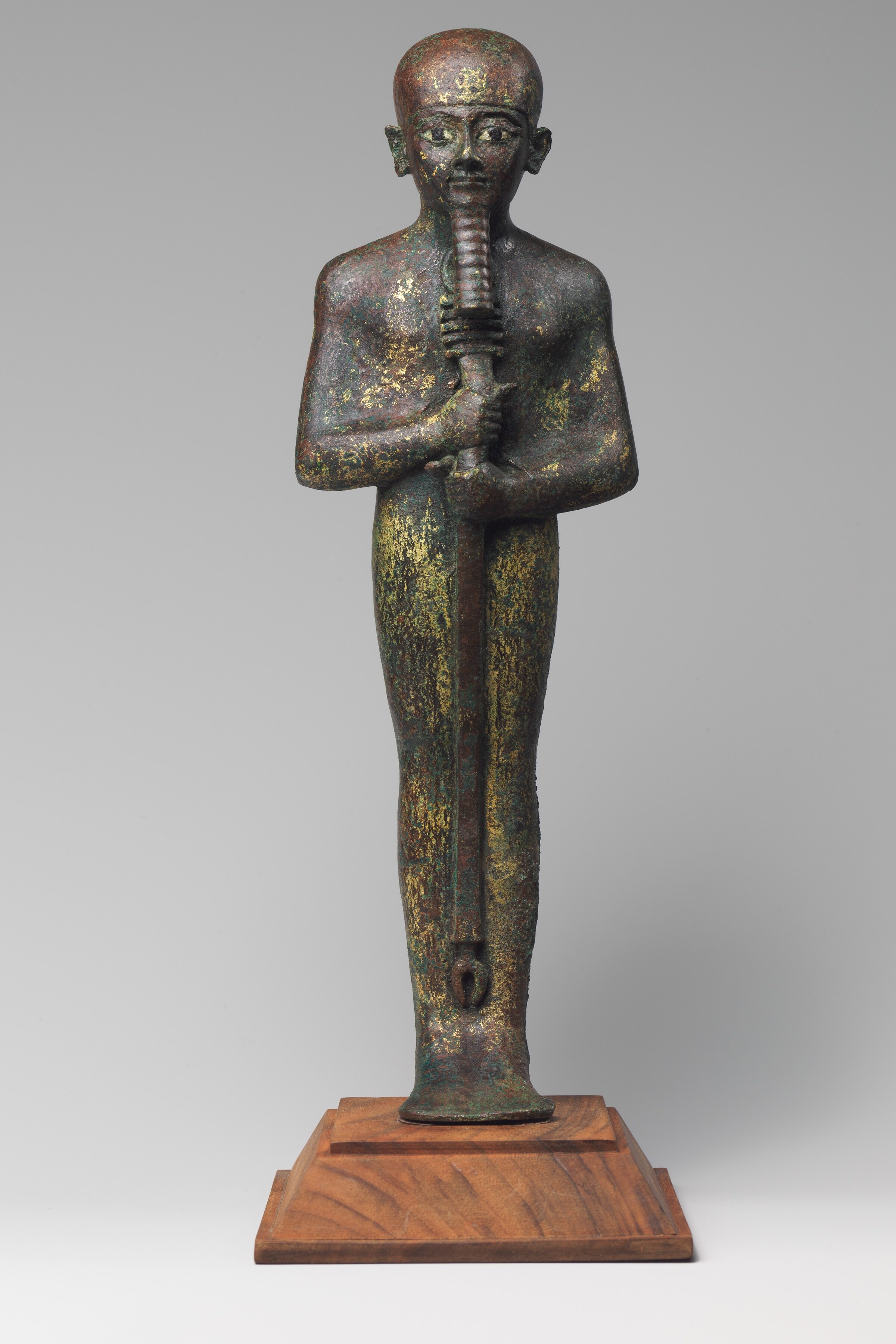
Ptah
Ptah was Memphis’s own creator god, and one of the Egyptian gods Kushite kings worshipped alongside their own. He was easy to identify in statues and reliefs: a tight-fitting cap, a straight beard that set him apart from the curved beards other gods wore, and a mummiform body wrapped tightly around a scepter held in front of him.
Memphis’s God, and the Name Egypt Itself
Ptah’s own temple at Memphis, called Hut-ka-Ptah, ranked among the most important religious sites in Egypt for centuries. That temple’s name, filtered through Greek, became Aigyptos, and Aigyptos is where the modern word Egypt actually comes from. A temple to a Memphite god is, in a real sense, where the country’s own English name originated.
Patron of Everyday Craftsmen
Ptah’s reach went well beyond royal theology. He was the patron god of craftsmen and sculptors specifically, invoked in workshops across the Nile Valley for the objects ordinary artisans made with their own hands. His high priest at Memphis held the working title chief controller of craftsmen, a title that names the god’s real, everyday relevance directly.
Creation by Naming Things
Ptah’s most famous surviving text is the Memphite Theology, preserved on what’s now called the Shabaka Stone. It describes Ptah bringing the world into being simply by conceiving it in his own mind and speaking it into existence, one of the more philosophically sophisticated creation accounts to survive from the ancient world. Read the fuller story of that stone, and why modern scholars now doubt its own claim to be an ancient copy, on Shabaka.
Worshipped Alongside Kush’s Own Gods
Kushite kings maintained Ptah’s temples and titles right alongside distinctly Kushite gods like Apedemak, a lion-headed war god Egypt never worshipped at all. That combination, real devotion to Egyptian tradition next to real investment in Kush’s own religious identity, runs through the whole century covered in The Black Pharaohs: When Kush Ruled Egypt.

Cite This Work
- APA
- Kush History. (2026). Ptah. Retrieved September 28, 2026, from https://kushhistory.com/glossary/ptah/
- Chicago
- Kush History. "Ptah." Published August 21, 2026. https://kushhistory.com/glossary/ptah/.
- MLA
- Kush History. "Ptah." Aug 21, 2026, https://kushhistory.com/glossary/ptah/.

Researched and written by Sunni. About this site.