 Kush
Kush 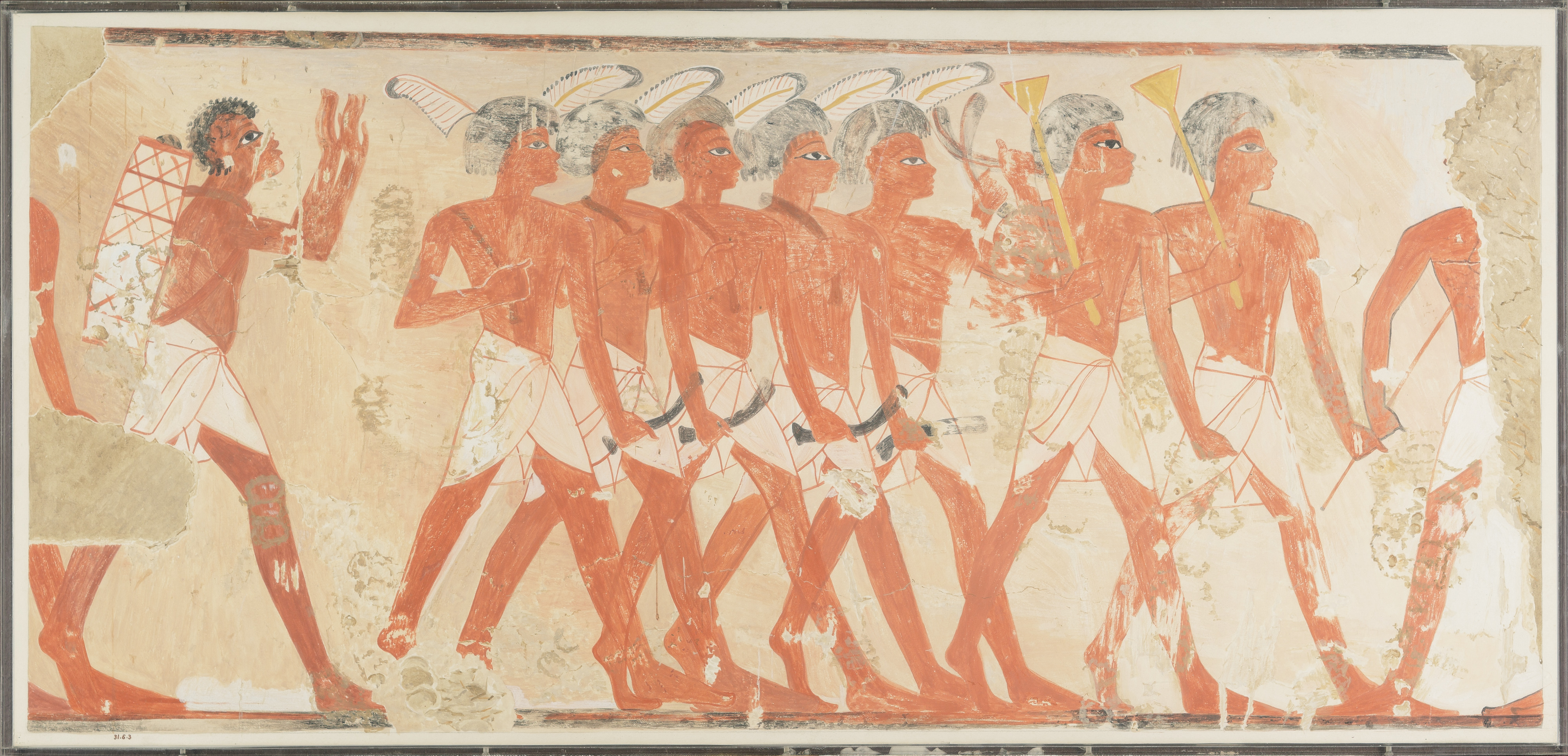
Were Ancient Egyptians and Nubians Genetically and Culturally Mixed?
Yes, and the evidence comes from two independent directions: written history and ancient DNA. Egyptians and Nubians lived beside each other along the same river for thousands of years, and both records show real, steady mixing between them.
The Historical Record
Contact between Egypt and Nubia goes back to Egypt’s earliest dynasties. By the Fourth Dynasty, intermarriage between the two peoples is documented in the historical record, and it continued for millennia afterward.
The clearest large-scale example sits at the center of this site’s own subject. For about a hundred years, Kushite kings ruled Egypt directly as its 25th Dynasty. That was Nubian rulers directly governing Egyptian temples, cities, and government, marrying into leading Egyptian families, and blending both traditions into how Egypt itself was run. Read the full story in The Black Pharaohs: When Kush Ruled Egypt.
Trade shows the same pattern below the royal level. Merchants, soldiers, and laborers moved constantly along the Nile between Egyptian and Nubian territory, and mixed communities grew up in the border regions where the two met.
The Genetic Record
Ancient DNA, often shortened to aDNA, gives a second, separate line of evidence. Studies of Nubian remains from the site of , in what is now northern Sudan, found a genetic mix of roughly 43 percent ancestry tied to Nile Valley and East African populations, with the rest tied to populations further north and east, ancestry that reached Nubia mostly by way of Egypt.
Timing matters here, and it’s worth being precise about it. The Kulubnarti remains studied come from later in Nubian history, after the Kingdom of Kush had already ended. They are direct evidence about that later population specifically. What they do show is that Egyptian-Nubian genetic mixing along this stretch of the Nile built up steadily over an extremely long stretch of time, with the Kushite period standing as one chapter among several.
Why “Biracial” Is the Wrong Word
It’s tempting to look at this evidence and reach for a modern term like biracial to describe ancient Nubians or Egyptians. That would be a real mistake.
Ancient Egyptians and Nubians organized identity around culture, religion, and political loyalty. A person’s standing depended on which god they served, which king they answered to, and which customs they followed. Applying “biracial” to someone from this period assumes a way of sorting people by race that did not exist for them, and quietly forces a modern American or European idea onto a society that organized itself in a completely different way.
This is also one of the most argued-over topics in ancient history content online, with strong opinions pulling in different directions depending on the source. Serious Egyptologists and historians resolve it with identity words tied to ancient culture and politics, a deliberate standard chosen to keep the evidence itself in focus.
What to Call It Instead
For a specific person’s identity, the accurate move is to use what the ancient sources actually used: Egyptian, Kushite, or Nubian, tied to culture, city, religion, and political allegiance rather than ancestry proportions. A 25th Dynasty king ruling from Napata or Thebes is Kushite, full stop, in exactly the sense the sources themselves used that word.
For the genetic evidence specifically, historians and geneticists skip social labels altogether and describe what the DNA actually shows directly: a population with mixed Nile Valley and Egyptian-related ancestry. That language stays accurate about the science without forcing a modern identity label onto people who never organized themselves around one.
What This Means for a DNA Result Today
If a DNA report points you toward Nile Valley, Northern African, or East African ancestry, this long history of mixing is very likely part of the real story behind that result. It does not place a specific Kushite king or queen somewhere in your family tree. It means your ancestors likely come, in part, from the same broad population movements and mixing described above.
For what these specific ethnicity labels trace back to, and how to think about a result like this responsibly, read AncestryDNA and 23andMe: Interpreting African and Nile Valley Ethnicity Results.
The Short Version
Egyptians and Nubians mixed continuously across thousands of years, at the top of society and far below it, and written history and ancient DNA back that up independently of each other. That mixing doesn’t support projecting a modern racial label backward onto people who organized their own identity in an entirely different way. Both of those facts hold true at the same time.
Cite This Work
- APA
- Kush History. (2026). Were Ancient Egyptians and Nubians Genetically and Culturally Mixed?. Retrieved September 28, 2026, from https://kushhistory.com/ancestry/were-egyptians-and-nubians-genetically-mixed/
- Chicago
- Kush History. "Were Ancient Egyptians and Nubians Genetically and Culturally Mixed?." Published August 16, 2026. https://kushhistory.com/ancestry/were-egyptians-and-nubians-genetically-mixed/.
- MLA
- Kush History. "Were Ancient Egyptians and Nubians Genetically and Culturally Mixed?." Aug 16, 2026, https://kushhistory.com/ancestry/were-egyptians-and-nubians-genetically-mixed/.
Researched and written by Sunni. About this site.