 Kush
Kush 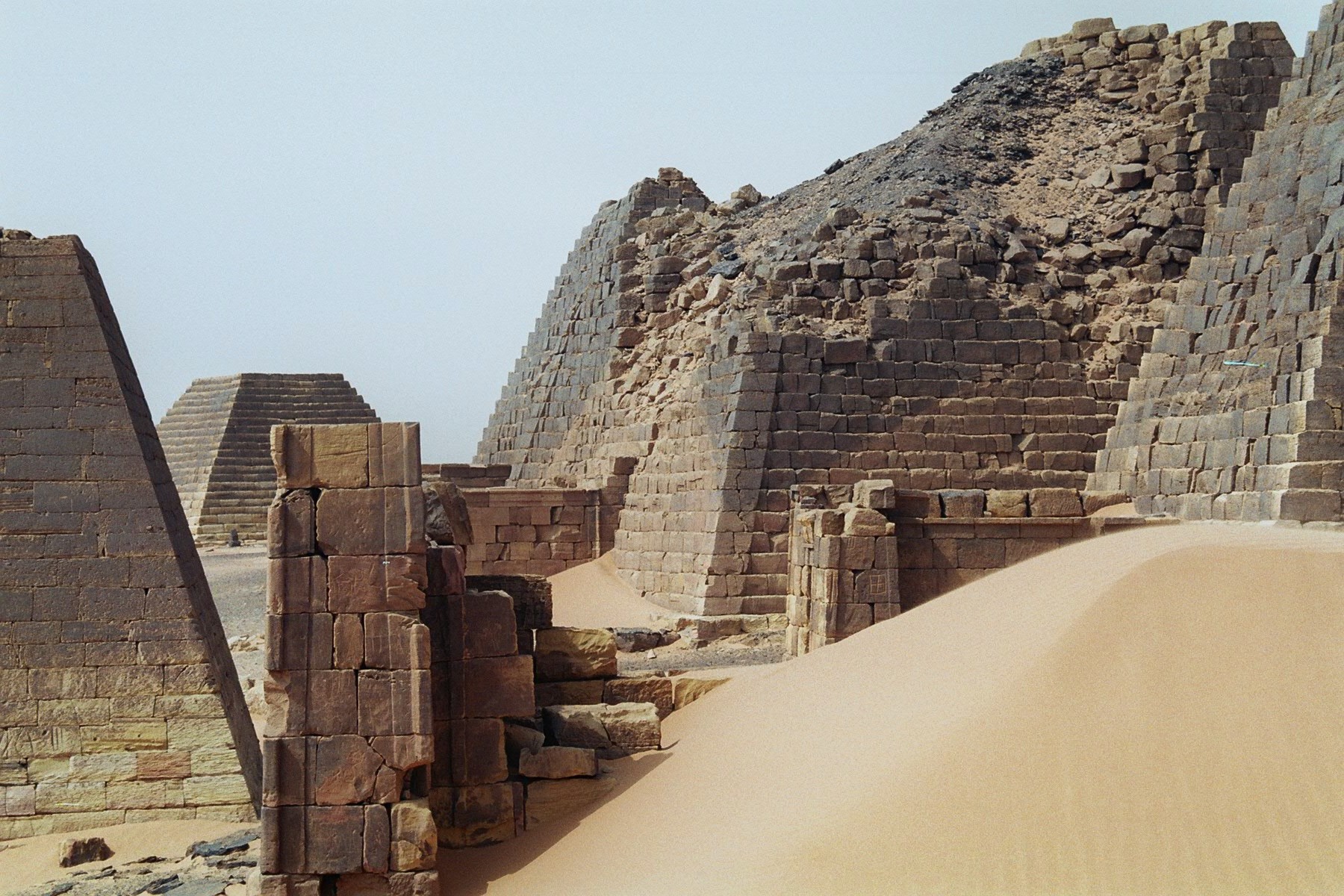
Why Sudan Has More Pyramids Than Egypt
Sudan has more pyramids than Egypt. Estimates vary, but historians commonly cite around 255 pyramids standing in Sudan against roughly 118 in Egypt.
The kings and queens who built them ruled an ancient civilization called . Kush rose along the Nile River in what is now Sudan. It grew wealthy and powerful, and for a time, it ruled Egypt too.
Here’s why Kush built so many pyramids, where to find them, and what happened to some of them along the way.
Where Kush’s Pyramids Stand
Kush’s pyramids sit in three main clusters south of Egypt. The earliest is at , where the first Kushite kings were buried. The next is at , just across the Nile from El-Kurru.
The largest and latest cluster rises at Meroë, Kush’s later capital and today a UNESCO World Heritage Site. Most English sources pronounce it meh-ROH-ee.
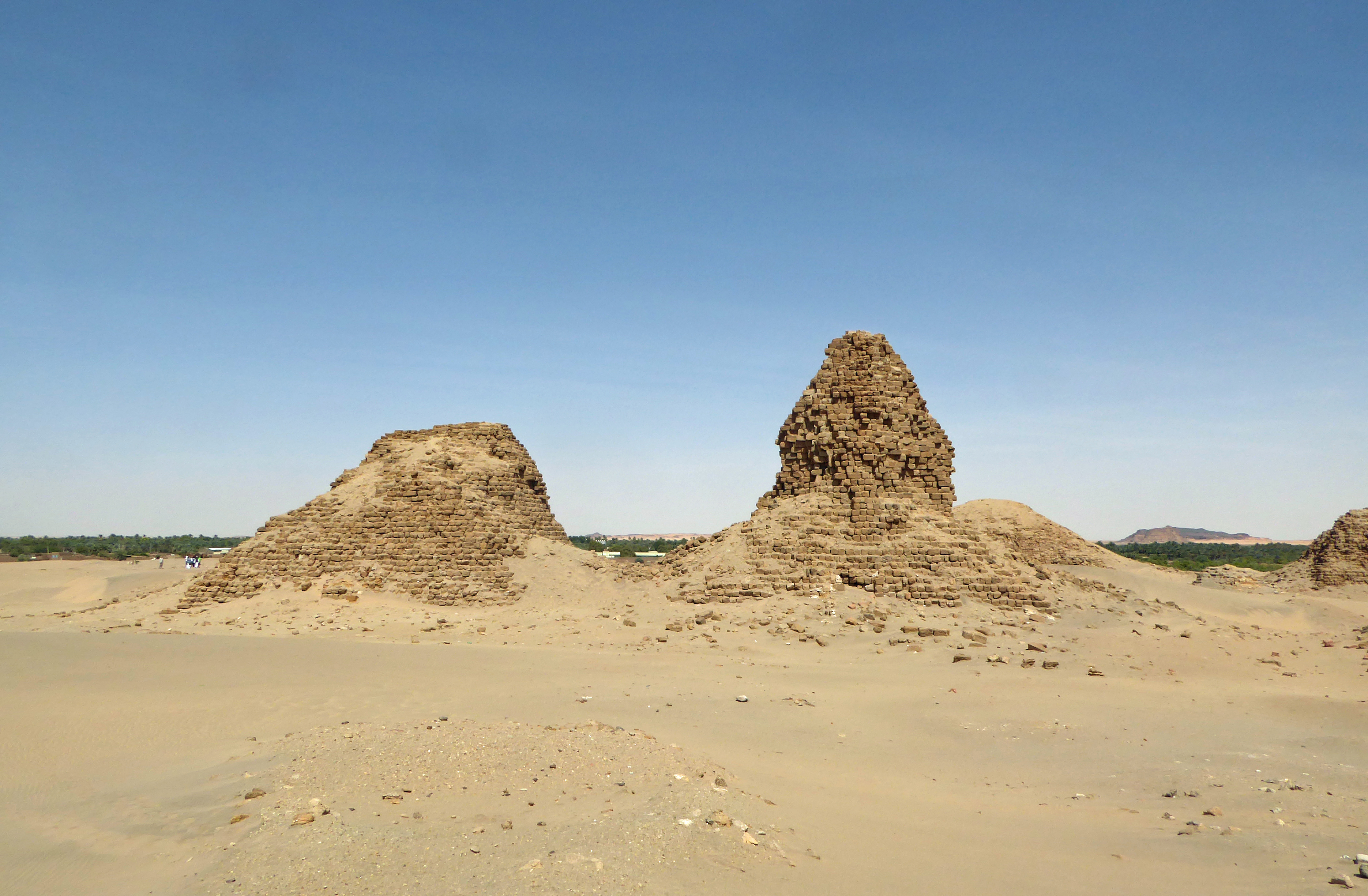
Each site marks a different chapter of Kush’s history. El-Kurru holds the earliest kings, including , who first pushed Kushite power north into Egypt. Nuri holds Taharqa’s pyramid, the largest ever built in Nubia. Meroë holds the later kings and queens who ruled after Kush’s capital shifted south, away from Egypt’s direct reach.
Historians know Kashta mainly from a handful of inscriptions, not from any surviving account of what ordinary Kushites thought of the move north. What the inscriptions do show is a religious claim: Kashta and the kings after him presented themselves as the true protectors of the god Amun’s worship, at a time when Egypt’s own rulers were fractured and weak. Whether that claim reflected genuine belief, political strategy, or both is a question historians still debate.
What’s Buried Inside
The body rested in a chamber cut into the rock below a Kushite pyramid, reached by a stairway or shaft. The pyramid stood above as a marker, built to be seen from a distance across the desert.
Most Kushite pyramids had a small chapel built against the east face. Priests carved scenes into the chapel’s walls, showing the king or queen receiving offerings from the gods. These carvings are often the clearest surviving record of what a specific ruler looked like and how their reign was remembered.
Grave goods once filled the burial chambers. Pottery, jewelry, and furniture were buried alongside Kushite rulers. At El-Kurru, archaeologists also found a separate cemetery of horses, buried standing upright near the pyramids of the kings they served.
By the time real excavation began, most of that had already been picked over. Nearly every pyramid at all three sites had been broken into and robbed long before modern archaeologists arrived, some long ago, some far more recently. The archaeologist George Reisner led the most thorough excavation of the three sites between 1916 and 1923, working for a joint Harvard University and Museum of Fine Arts Boston expedition. Reisner’s team documented what looters had left behind before it could disappear too.
That documentation is why the Museum of Fine Arts Boston now holds one of the largest collections of Kushite artifacts outside Sudan itself. Other pieces ended up at the British Museum in London, and the Sudan National Museum in Khartoum holds much of what stayed in the country. A single dig, in other words, is a major reason any of this is still visible to study at all.
Why One Kingdom Built So Many
Egypt reserved pyramids mostly for its pharaohs. A small number of rulers received one, across a relatively narrow window of time. Kush did things differently.
Kushite pyramids marked the graves of kings and queens across many generations. Kush also gave the title Kandake to its ruling queens. Several Kandakes received their own pyramids, standing as equals beside the kings.
Fun fact: the English name Candace comes from Kandake. Roman and Greek writers heard the Kushite royal title so often that they mistook it for a personal name, and it passed into English through the Bible and Roman histories that way. Every Candace alive today is carrying a Kushite queen’s job title.
More rulers, spread across more centuries, meant more pyramids. Kush kept building them for close to a thousand years, long after Egypt had largely stopped.
Kings and Kandakes sat at the very top of Kushite society. See how their lives compared to everyone below them in Rich vs. Poor in Ancient Kush.
Smaller, Steeper, and Just as Real
Egypt’s Great Pyramid at Giza once stood about 146 meters tall. Most pyramids at Meroë reach somewhere between 6 and 30 meters.
The shapes differ too. Egypt’s pyramids slope outward in a wide, gentle triangle. Kush’s pyramids rise narrow and steep, closer to spikes than mountains.
Historians treat the Kushite style as its own architectural tradition. Kush borrowed the idea of the pyramid from Egypt, then reshaped it to fit its own beliefs and its own land.
For the full side-by-side breakdown, with a diagram of the angle difference and real-world size comparisons, see Nubian Pyramids vs. Egyptian Pyramids: What’s the Difference?
Burial customs underneath differed as well. The chamber holding the body sat underground. The pyramid rose above it as a marker and a monument.
When Kush Ruled Egypt
For about 100 years, Kush did more than build near Egypt. Kushite kings ruled Egypt directly. Historians call this period Egypt’s 25th Dynasty. Its kings are sometimes called the Black Pharaohs.
Kings like and governed both Kush and Egypt at once. They restored temples, built monuments across both kingdoms, and returned home to Nubia to be buried under pyramids of their own.
This shared history is one reason Kush’s pyramids echo Egypt’s. It is also why the two civilizations are so often compared, even though they built, ruled, and buried their dead in different ways.
A Treasure Hunter’s Damage
Not every chapter of this story is a triumph. In 1834, an Italian adventurer named Giuseppe Ferlini searched Meroë’s pyramids for gold. He tore the tops off dozens of them.
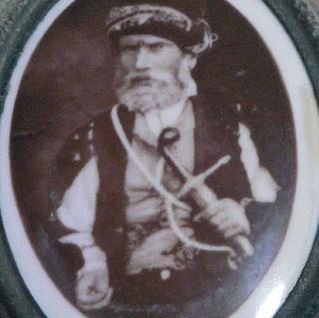
Ferlini was born in Bologna, Italy, in 1797. He trained as a physician and worked as a military doctor before turning to treasure hunting in Sudan. Local rumors told him that Kushite royal treasure was hidden inside the pyramids themselves, not underground. That belief is why he dug straight down through the tops instead of searching for burial chambers below.
Ferlini did find treasure. He uncovered a collection of gold jewelry buried with a Kushite queen named : rings, bracelets, and amulets, packed among the rubble he tore loose.
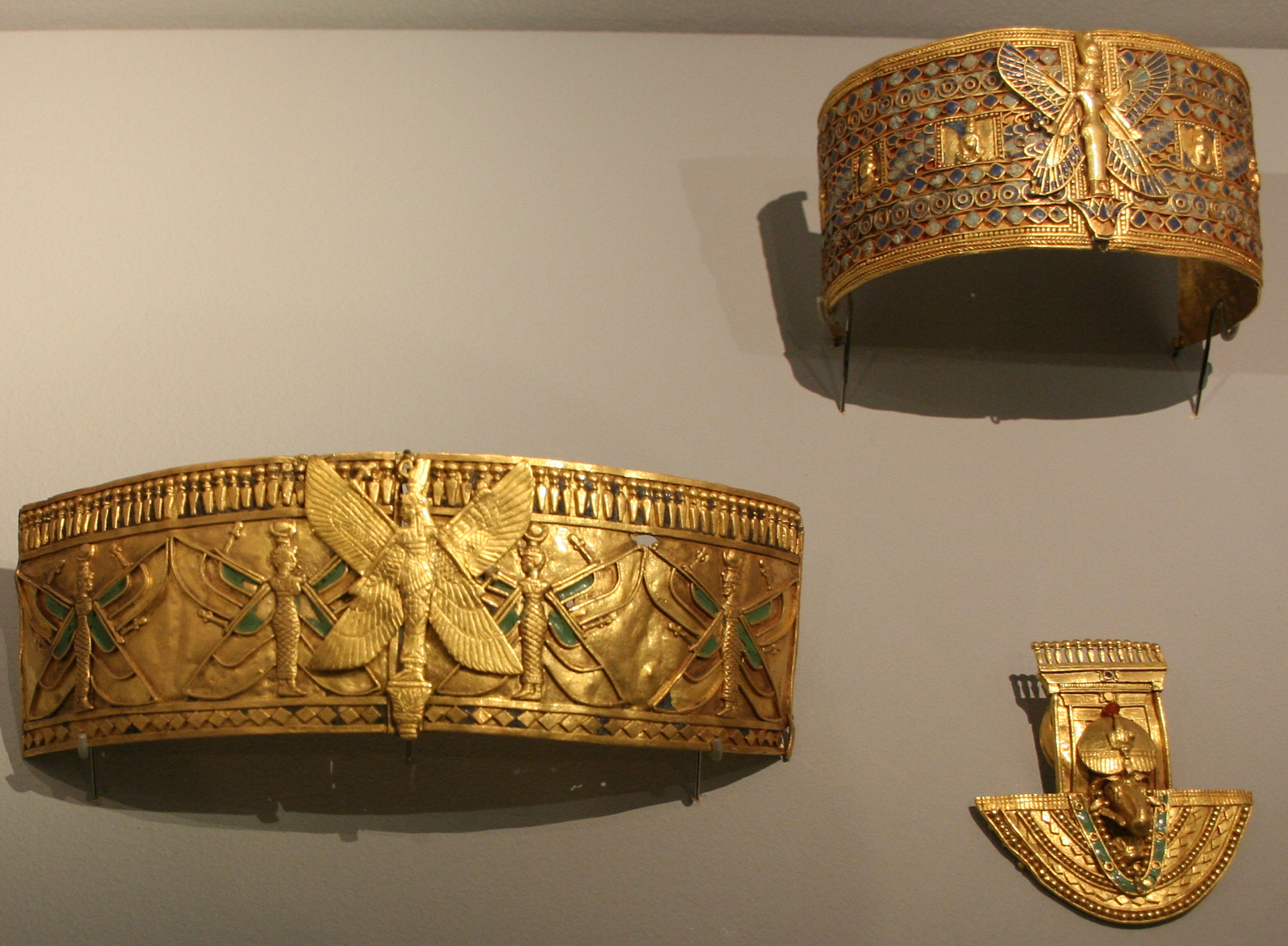
At first, many European scholars did not believe the jewelry was genuinely ancient Kushite work. They assumed a civilization in ancient Sudan could not have made anything so fine, and some accused Ferlini of faking it or bringing it in from elsewhere. Later study proved them wrong. The gold is authentic ancient Kushite work, and today it stands among the finest surviving examples of Kushite metalwork anywhere.
That gold now sits in museums in Berlin and Munich, far from Sudan.
The damage is still visible today. Many of Meroë’s pyramids stand without their original peaks, a visible reminder of what was taken and where it went.
Visiting Sudan’s Pyramids Today
Giza draws long lines and crowded viewing platforms. Meroë, Nuri, and El-Kurru do not.
Giza’s crowds come mostly from geography and time, not from being the only real pyramid field left standing. Giza sits at the edge of Cairo, one of the world’s largest cities, with an international airport, hotels, and tour buses close by. It has appeared on postcards, coins, and movie screens for two centuries. That kind of head start is hard for any other ancient site to match.
What a visitor to Meroë gets instead is scale without the crowd. Giza has three major pyramids standing alone on its plateau. Meroë has dozens, close enough together to walk between in an afternoon, with no ticket line and no barrier rope. Climbing a dune at sunset puts an entire ancient skyline in view at once, something a single stop at Giza cannot offer.
Travelers who do make the trip often describe having entire pyramid fields nearly to themselves, with only the wind and the sand for company. That quiet is part of what makes the site remarkable, and more people knowing about it is overdue.
Sudan’s own conflict and its lack of roads, hotels, and tour services have made independent travel there difficult for long stretches of recent history. Check current travel advisories before planning any trip, since conditions on the ground can shift quickly.
Why So Few People Know This
Egypt’s pyramids draw millions of visitors every year. Sudan’s pyramids, despite outnumbering them, draw a small fraction of that attention.
Decades of conflict, and too few roads and hotels for tourists, have kept the sites off most travelers’ routes. Western archaeology has also put far more money and attention into Egypt than into Kush.
That gap is starting to close. Renewed archaeological work, wider awareness of Sudan’s history, and simple facts like Sudan’s pyramid count are pulling more attention toward Kush.
Some of that renewed attention comes from genuinely new discoveries. Archaeological surveys at Sedeinga, north of the main pyramid fields, turned up far more pyramids than anyone expected: a dense field of small structures built for ordinary families as well as kings and queens, some standing barely a meter tall. The find showed that pyramid building in Kush reached further down the social ladder than historians had assumed.
Kush’s location on the map is a big part of why historians keep finding more. The kingdom sat right on the Nile’s trade routes between the Mediterranean world and the interior of Africa. Gold, ivory, ebony, and incense moved north through Kush on their way to Egypt and beyond, and Kush controlled and taxed that traffic for centuries. A kingdom sitting at the center of that much trade left behind a great deal still waiting to be found. That same geography, the river, the desert gold, and the trade routes, is also a big part of why Kush lasted as long as it did. Read the fuller argument in Why the Nile Made Kush a Superpower.
Curious About Your Own Connection to Kush?
Ancient Nubia and Egypt were neighbors on the same river for thousands of years. Their peoples mixed, traded, and intermarried across that long stretch of time.
If a DNA test has ever pointed you toward Nile Valley or African ancestry, that history is part of the answer. Read what Nubian or Kushite ancestry actually means for a plain explanation.
The Short Version
Kush built pyramids for far more of its rulers than Egypt did. It kept building them for a much longer stretch of time. And it built them in a style all its own.
The kingdom behind them ruled the Nile Valley for centuries. For a time, it ruled Egypt too. Explore the rest of this site to meet the kings, queens, and cities behind these numbers, starting with the queen who fought Rome and won.
Frequently Asked Questions
How many pyramids does Sudan have compared to Egypt?
Historians commonly count around 255 pyramids in Sudan. Egypt has roughly 118. Sudan's pyramids sit in three clusters south of Egypt: El-Kurru, Nuri, and Meroë.
Why did Kush build so many pyramids?
Kush gave the pyramid honor to kings and Kandakes across close to a thousand years. Egypt reserved it mostly for pharaohs across a shorter span of time. More rulers across more centuries meant more pyramids.
Where are Sudan's pyramids located?
Sudan's pyramids stand south of Egypt along the Nile River. El-Kurru and Nuri sit near the ancient city of Napata. Meroë stands farther south, the later capital where Kush's kings and queens ruled after Egypt's reach faded.
Sources
- Napatan Period — UCLA Encyclopedia of Egyptology
- Excavations at Sedeinga: A New Start — Claude Rilly & Vincent Francigny, Sudan & Nubia (HAL open archive)
- Queenship in Kush: Status, Role and Ideology of Royal Women — Angelika Lohwasser, Journal of the American Research Center in Egypt 38 (2001)
- The Ancient Sudan: Queen Amanishakheto's Treasure — Egyptian Museum, Berlin
- Nubian Art — Museum of Fine Arts, Boston
- Nubian pyramids — Wikipedia
- George Andrew Reisner — Wikipedia
- Giuseppe Ferlini — Wikipedia
Cite This Work
- APA
- Kush History. (2026). Why Sudan Has More Pyramids Than Egypt. Retrieved September 28, 2026, from https://kushhistory.com/sudan-has-more-pyramids-than-egypt/
- Chicago
- Kush History. "Why Sudan Has More Pyramids Than Egypt." Published August 16, 2026. https://kushhistory.com/sudan-has-more-pyramids-than-egypt/.
- MLA
- Kush History. "Why Sudan Has More Pyramids Than Egypt." Aug 16, 2026, https://kushhistory.com/sudan-has-more-pyramids-than-egypt/.
Researched and written by Sunni. About this site.