 Kush
Kush Where Is Kush? A Map and Location Guide
Kush was located along the Nile River in what is now Sudan, directly south of Egypt. At its largest, during the century Kushite kings ruled Egypt too, its territory stretched from deep in Sudanese Nubia all the way north to the Mediterranean coast.
The Map
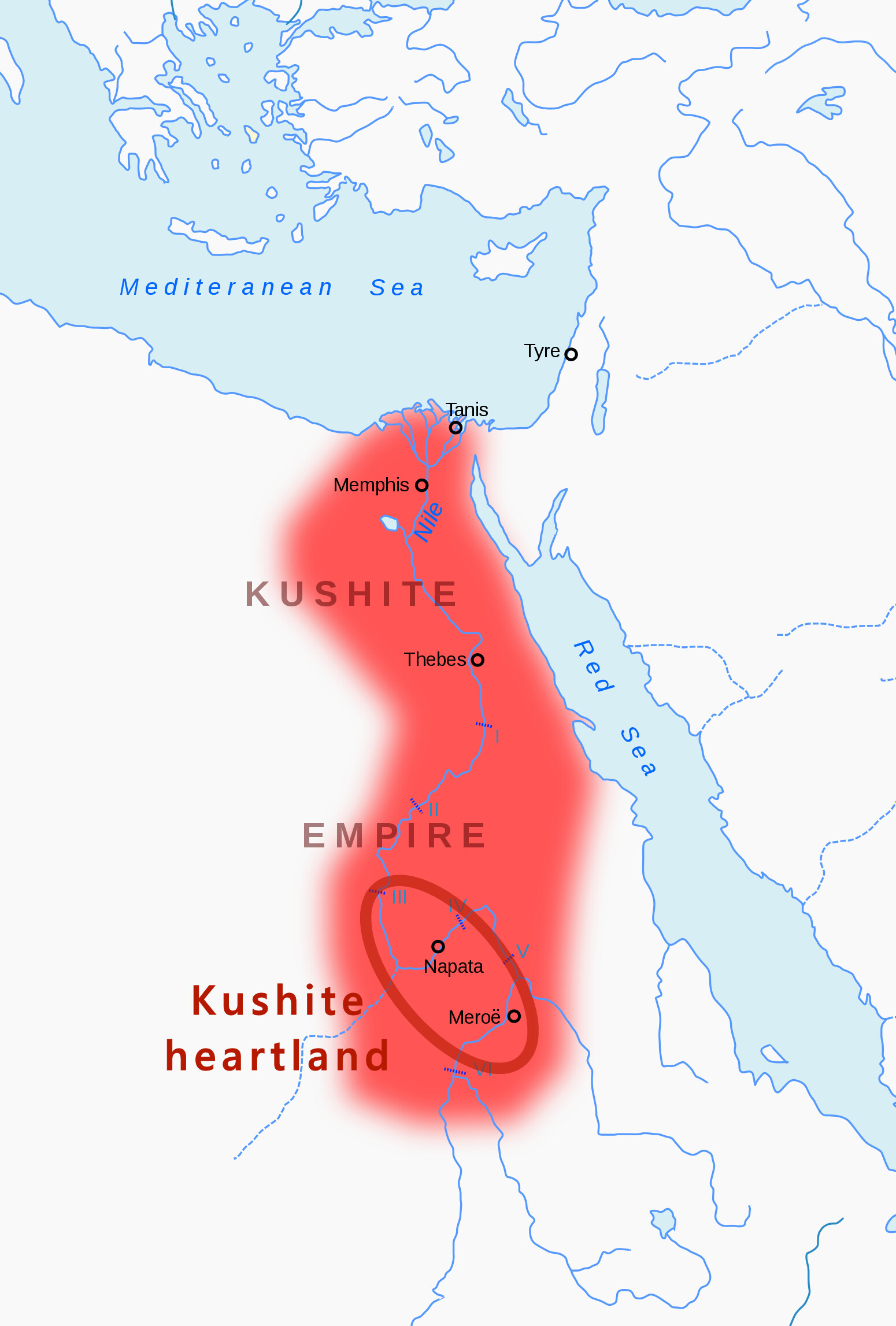
Map: Lommes and पाटलिपुत्र, CC BY-SA 4.0, via Wikimedia Commons, based on a 2019 National Geographic source map.
Map Key
- Land under Kushite rule, around 700 BCE, including Egypt
- Kush's own heartland, held for its whole thousand-year history
- Sea or river
- A named city
The Modern Country Is Sudan
If you’re looking for Kush on a modern map, look for Sudan. Here are the two modern countries that cover the same ground as the map above, side by side for comparison. Neither map below marks any ancient Kushite site directly, since Napata and Meroë are too small to appear on a country-wide map. The star on each one marks that country’s modern capital only, Khartoum and Cairo.
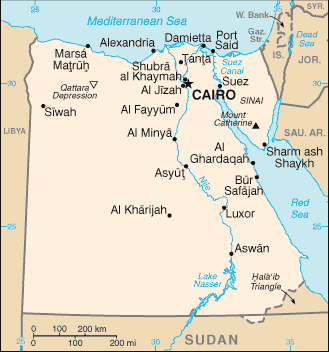
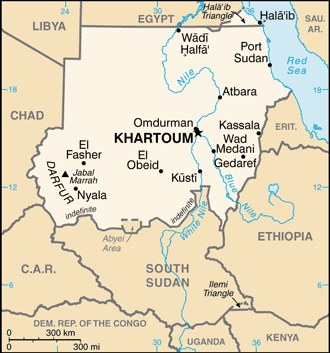
Maps: US Central Intelligence Agency, World Factbook, public domain, via Wikimedia Commons.
Kush’s core territory sits almost entirely inside modern Sudan’s borders, stretching from around Aswan, just inside Egypt’s current southern border, down through Karima, the modern town nearest ancient Napata, to Shendi, the modern town nearest ancient Meroë, and on toward Khartoum, Sudan’s capital today. Neither Karima nor Shendi is large enough to appear on a country-wide map like the ones above, but Atbara, labeled on the Sudan map, sits in the same general stretch of the Nile as Meroë.
The Cataracts That Shaped Its Borders
The Nile’s six cataracts, stretches of rocky rapids that break up the river’s otherwise smooth flow, run from Aswan in the north to Sabaloka, north of Khartoum, in the south. They shaped Kush’s history directly. The First Cataract at Aswan long marked the practical boundary between Egypt and Nubia. The stretch between the second and third cataracts is where the name Kush originally applied most narrowly, before it grew to describe the much larger kingdom this whole site covers. The Fourth Cataract sits right by Napata, and the region around it became one of the deepest centers of Nubian culture.
Why Kush Goes By So Many Names
If you’ve seen this civilization called Kush, Cush, Nubia, or even Ethiopia in different sources, all four names point at roughly the same place, used by different people at different times. Ancient Egyptians called it Kush. The Hebrew Bible spells it Cush, and English Bible translations render that name inconsistently, sometimes as Cush, sometimes as Ethiopia, sometimes as Nubia. Ancient Greek and Roman writers called the same general region Aethiopia, a broad geographic label for lands south of Egypt, not a reference to the modern country called Ethiopia today, which sits much further south and east, in the Horn of Africa. Medieval Arab writers later called the region Nubia, the name still most commonly used for the wider geographic area today.
Kush is the specific, best documented kingdom that rose in this region, which is why this site is built around that name specifically. Curious how Nubia the place and Kush the kingdom relate to each other in more depth? Read What Does Nubian or Kushite Ancestry Mean? Curious about the two cities that anchored Kush’s territory across its history? Read Napata: Kush’s First Capital and Meroë: The City Behind the Pyramids.
Cite This Work
- APA
- Kush History. (2026). Where Is Kush? A Map and Location Guide. Retrieved September 28, 2026, from https://kushhistory.com/where-is-kush/
- Chicago
- Kush History. "Where Is Kush? A Map and Location Guide." Published August 21, 2026. https://kushhistory.com/where-is-kush/.
- MLA
- Kush History. "Where Is Kush? A Map and Location Guide." Aug 21, 2026, https://kushhistory.com/where-is-kush/.
Researched and written by Sunni. About this site.