 Kush
Kush 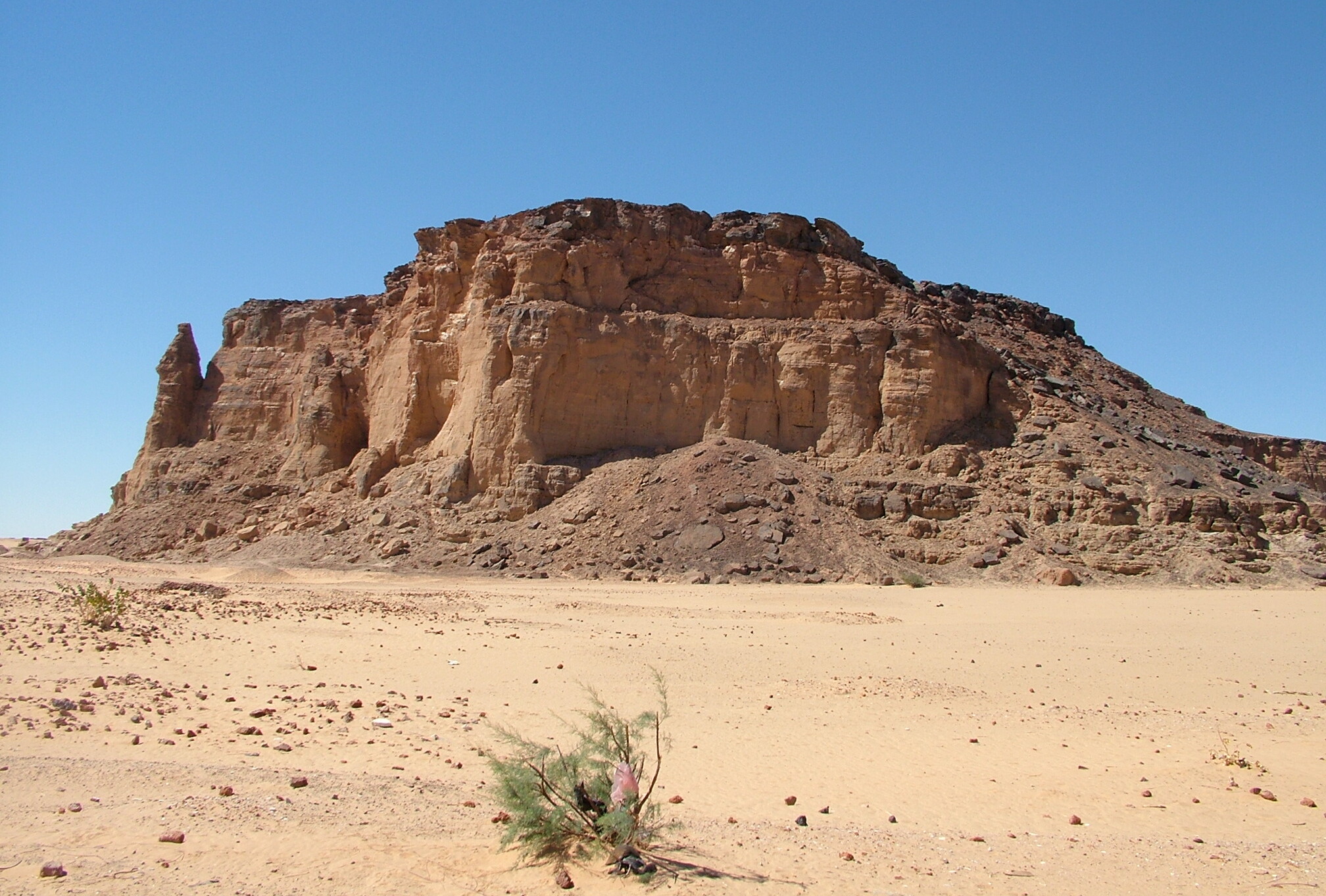
Photo: LassiHU, CC BY-SA 4.0, via Wikimedia Commons
Napata: Kush's First Capital
Napata, pronounced NAP-uh-tuh, was Kush’s first capital, built around a mountain ancient Egyptians believed was one of their own god’s birthplaces. It sits near the modern Sudanese town of Karima, close to the Nile’s fourth cataract, and it stayed central to Kushite religious life for centuries after kings stopped actually living there.
A Mountain Egypt Claimed as Sacred
Napata grew up around , a flat-topped sandstone mountain rising abruptly from the desert. When Egyptian forces pushed this far south under Pharaoh Thutmose III, around 1450 BCE, they identified the mountain as a birthplace of Amun, their own state god, and built a temple to him at its base.
One detail explains why the mountain carried so much weight. A tall, standalone pillar of rock stands at one corner of Jebel Barkal, and its shape struck ancient viewers as resembling a rearing cobra, the uraeus worn on a king’s crown as a symbol of royal power. Egyptians read that natural formation as proof the mountain itself was a real source of kingship, more than simply a place where kingship was worshipped. Kushite kings later wore crowns echoing the mountain’s own silhouette, a visual claim that their authority came directly from that same “Pure Mountain.”
From Egyptian Outpost to Kushite Capital
Egypt’s own empire in Nubia collapsed around 1070 BCE, and Napata’s temple to Amun outlasted the empire that built it. By about 750 BCE, a new Kushite kingdom had formed around Napata, and its kings, starting with Kashta, began styling themselves as Amun’s true protectors at a moment when Egypt’s own rulers were fractured and weak. Piye marched north from Napata around 727 BCE and conquered Egypt, and Shabaka and Taharqa governed the Double Kingdom from here for decades after him.
A Religious Capital Even After Kings Left
Kush’s practical center of gravity eventually shifted south to Meroë, closer to rainfall, grazing land, and iron ore, and further from Egypt’s reach. That shift was part of a wider pattern in why the Nile made Kush a superpower in the first place. Napata did not fade when that happened. Its Amun temple remained the kingdom’s most important religious site, and Kushite kings kept traveling back to Napata to be formally crowned there for generations after they had stopped living there day to day.
Egypt Strikes Back
Napata’s religious authority did not protect it from Egyptian retaliation. In 593 BCE, the Egyptian pharaoh Psamtik II sent an army, including Greek and Carian mercenaries under commanders named Potasimto and Amasis, deep into Kushite territory. They sacked Napata itself, looting its temples and smashing royal statues, during the reign of the Kushite king Aspelta. Egyptian forces did not stay to hold the territory, retreating back north to Elephantine afterward, but the damage accelerated a shift already underway: Kush leaned further into Meroë as its practical seat of power. Royal burials themselves did not fully move to Meroë until around 270 BCE, so Napata’s own royal cemeteries stayed in active use for centuries after this attack.
Buried Nearby
Napata’s kings were buried close by, not on the mountain itself. El-Kurru, the older of the two cemeteries, holds Kush’s earliest kings. Nuri, across the river, holds later rulers including Taharqa, under the largest pyramid ever built in Nubia. Read more about both sites, and the rest of Kush’s pyramid fields, in Why Sudan Has More Pyramids Than Egypt.
A Recognized World Heritage Site Today
UNESCO added Jebel Barkal and four related sites, including El-Kurru and Nuri, to its World Heritage List together, recognizing them as one connected record of the Napatan era of Kushite history. The mountain, its temple ruins, and its pinnacle still stand at Karima today, a physical record of a claim about kingship that shaped Kushite rule for centuries.

Cite This Work
- APA
- Kush History. (2026). Napata: Kush's First Capital. Retrieved September 28, 2026, from https://kushhistory.com/places/napata/
- Chicago
- Kush History. "Napata: Kush's First Capital." Published August 21, 2026. https://kushhistory.com/places/napata/.
- MLA
- Kush History. "Napata: Kush's First Capital." Aug 21, 2026, https://kushhistory.com/places/napata/.
Researched and written by Sunni. About this site.