 Kush
Kush 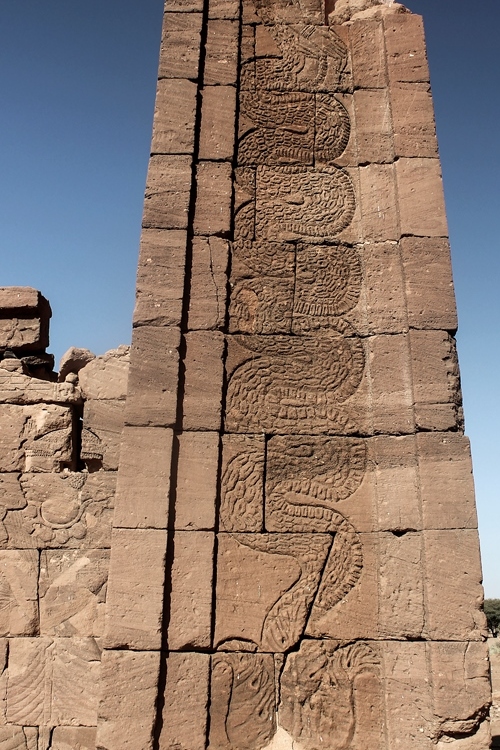
Photo: Clemens Schmillen, CC BY-SA 4.0, via Wikimedia Commons
Ancient Nubian Religion: Amun and Kush's Own Gods
Ancient Nubian religion started out almost entirely Egyptian. Kush’s kings worshipped Amun, the same state god Egypt did, at grand temples built in Egyptian style. That changed over time. By the centuries when Meroë was Kush’s capital, the kingdom had built its own gods too, and those gods had become just as central to Kushite life as Amun ever was.
Amun at the Center
When Kush first rose as an independent kingdom, its religious life ran almost entirely on Amun. Napata’s own temple to Amun, built at the base of the sacred mountain Jebel Barkal, anchored the whole kingdom’s sense of legitimate rule. A king’s real claim to the throne rested on Amun’s approval, and priests at Napata played a direct role in choosing who ruled.
Kushite kings put real devotion into this adopted religion, well beyond political convenience alone. They rebuilt and expanded Amun’s temples across both Kush and Egypt, took on Egyptian religious titles, and worshipped other adopted gods like Ptah alongside Amun. During this early period, historians have found no clear evidence of any Kushite god that didn’t originally come from Egypt.
Kush Builds Gods of Its Own
That changed once Meroë became Kush’s capital. Starting in this later period, entirely new gods start appearing in Kushite temples, gods with no Egyptian origin at all.
The most important was Apedemak, a lion-headed war god worshipped nowhere in Egypt. His major temple at Naqa, a city south of Meroë, still stands today. Two more homegrown gods, Sebiumeker and Arensnuphis, appear together again and again in temple art from this period, carved standing on either side of doorways as guardians. Sebiumeker was tied to fertility and creation. Arensnuphis was linked to war and hunting. Both show up at Naqa and at a second major site called Musawwarat es-Sufra, one single place despite the hyphenated name, always paired together, always by name.
Amun did not disappear once these newer gods arrived. His temples at Napata and Meroë both stayed active. But his role at the center of Kushite religious life grew smaller as Kush’s own gods grew larger, a real shift historians can trace directly through which gods show up in which temples, at which point in time.
Why Kush Started Building Its Own Gods
Ancient sources point to a real turning point behind this shift, even though some of the details are disputed.
A Kushite king named Arkamani, known to Greek writers as Ergamenes, ruled from Meroë around 270 BCE. That puts him at roughly the same time as Egypt’s own King Ptolemy II Philadelphus, who ruled from Alexandria.
The fullest surviving account of Arkamani comes from the Greek historian Diodorus Siculus. Diodorus was writing roughly two centuries after Arkamani’s own reign. He was not an eyewitness. His account draws on an even earlier writer, a Greek geographer named Agatharchides, whose own original text has not survived on its own.
That account says Napata’s priests had long claimed the right to order a king’s death whenever they decided Amun wanted a new ruler in his place. Arkamani had been educated in Greek philosophy. Diodorus says Arkamani refused that order when it came for him, marched on the priests with an armed force instead, and ended their control over royal succession for good.
Modern historians are split on how literally to take that story. The archaeologist George Reisner, who excavated much of Kush’s own royal cemeteries firsthand, called it very doubtful, suspecting it hardened from legend into accepted fact over time. The more recent Nubiologist Derek Welsby takes a more open position. He writes plainly that the story has been doubted, but that no other evidence exists either way to settle the question. Both agree on one thing: no independent record confirms Diodorus’s dramatic version of events.
What scholars do connect with real confidence is the timing. Arkamani’s reign lines up directly with the same era Kush’s own gods start appearing in the archaeological record. That was a period when kings based at Meroë grew steadily more independent of Napata’s older religious establishment.
That same king, Arkamani, is also credited with another major break from Egyptian tradition around this same period. He helped move Kush toward writing in its own Meroitic script instead of relying only on Egyptian hieroglyphs for royal records. A kingdom building its own writing system and building its own gods within the same stretch of history points in one direction: toward a Kush growing more confident asserting its own identity, independent of Egypt’s older religious and cultural authority.
Temples, Priests, and Royal Power
Religion and royal power stayed tightly linked throughout Kush’s history, not only during the Amun-centered early period. The office of God’s Wife of Amun, held by Kushite royal daughters at Thebes, shows how directly religious authority and political authority overlapped. A temple wasn’t only a place of worship. It was also where a king’s legitimacy got confirmed, and where a kingdom’s wealth and labor visibly went on display.
A Kingdom That Built Its Own Story
The shift from borrowed gods to homegrown ones runs alongside the same pattern found across the rest of Kushite history and culture. Kush started out deeply tied to Egyptian tradition, kept real respect for that tradition throughout its history, and still found room to build something distinctly its own. Apedemak’s lion temple at Naqa stands today as physical proof of that, a monument to a god no one but Kush ever worshipped.
Cite This Work
- APA
- Kush History. (2026). Ancient Nubian Religion: Amun and Kush's Own Gods. Retrieved September 28, 2026, from https://kushhistory.com/culture/ancient-nubian-religion/
- Chicago
- Kush History. "Ancient Nubian Religion: Amun and Kush's Own Gods." Published August 21, 2026. https://kushhistory.com/culture/ancient-nubian-religion/.
- MLA
- Kush History. "Ancient Nubian Religion: Amun and Kush's Own Gods." Aug 21, 2026, https://kushhistory.com/culture/ancient-nubian-religion/.
Researched and written by Sunni. About this site.