 Kush
Kush 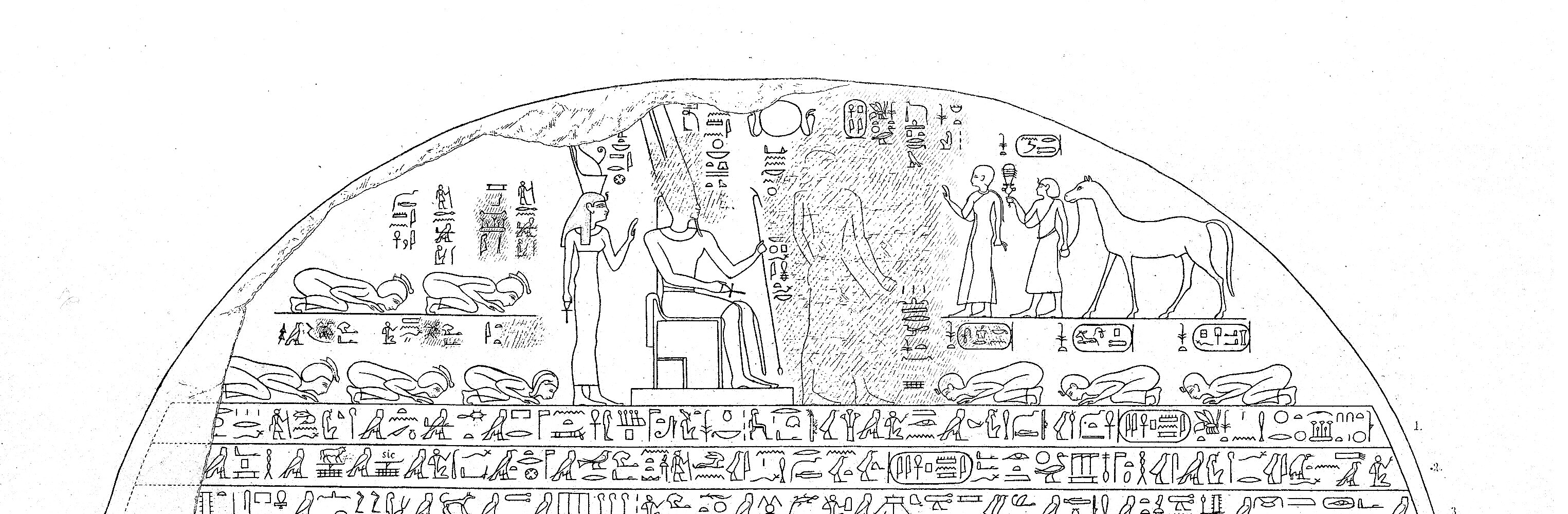
This page contains affiliate links. We may earn a commission at no cost to you. See our affiliate disclosure for details.
Piye
Piye, conventionally pronounced PEE-yuh, ruled Kush from Napata, in Nubia, and around 727 BCE he marched north and conquered Egypt. He was the first king of the 25th Dynasty, the line of Kushite pharaohs who ruled Egypt and Kush together for close to a century, a line historians now call the Black Pharaohs.
That pronunciation is a modern scholarly convention, worth taking as a best guess rather than a certainty. Egyptian hieroglyphic writing recorded consonants, not vowels, so no surviving text tells us exactly how Piye’s own contemporaries said his name aloud.
Egypt Before Piye Arrived
There was no single Egyptian king for Piye to defeat. Egypt had splintered into competing local rulers, each controlling a city or region and answering to no one above them. The strongest was Tefnakht of Sais, in the western Nile Delta, who was busy building his own local empire by picking off rival princes one at a time. Others included Osorkon IV at Tanis, Iuput II at Leontopolis, Peftjauawybast at Herakleopolis, and Nimlot at Hermopolis.
Piye’s own father, Kashta, ruled Kush before him and had already extended Kushite influence north toward Thebes. Kashta’s own stela, found at Elephantine near Aswan, records his throne name, Nimaatre, and shows Kushite control already reaching into southern Egypt in his lifetime. He placed his daughter Amenirdis I on track to become God’s Wife of Amun at Thebes, the same religious office that later gave Kushite royal women real influence over the city. Piye inherited that foothold and turned it into a full military campaign.
The Victory Stela
Piye recorded his campaign on a granite stela now known as the Victory Stela, discovered at Jebel Barkal and now held in the Egyptian Museum in Cairo. It describes Tefnakht’s expansion alarming Piye enough to send Kushite forces north, first to relieve a siege at Herakleopolis, then to fight and win a string of battles down through the Delta.
Tefnakht avoided a final direct defeat, retreating to an island stronghold and eventually submitting by messenger rather than in person. The other Delta rulers came before Piye directly, prostrating themselves and handing over horses, gold, and goods as tribute.
Why He Refused to Dine With Them
The stela records a detail most conquest accounts leave out. Once the Delta rulers had submitted, Piye would not let most of them into his presence, and he would not eat with them, calling their habit of eating fish “an abomination of the palace” in his own words. Only Nimlot of Hermopolis, judged ritually pure, was allowed into the palace.
That taboo had deep roots. Centuries later, the Greek writers Herodotus and Plutarch both recorded that Egyptian priests avoided fish for religious reasons, tied to a myth in which the goddess Isis recovered the dismembered body of the god Osiris from the Nile, all of it except one piece a fish had eaten. Piye was drawing on that same priestly purity code to present himself as a properly pious king next to Delta rivals he wanted to look ritually inferior, a religious and political statement about kingship itself. Fish was in fact a common, ordinary food along the Nile at every level of society.
That detail matters because it shows what Piye actually cared about: submission, tribute, and proper respect for the god Amun, whose main temple sat at Thebes. Once he had all three, he considered the campaign finished.
Why He Went Home
Piye returned to Napata after his victory and ruled from there for the rest of his reign. He left the defeated Delta rulers in place as tribute-paying vassals instead of replacing them with Kushite officials. Egypt stayed fractured under local rulers who now answered, at least nominally, to a king in Nubia.
Full direct rule over a unified Egypt came later, under his successor Shabaka, who moved against the same Delta princes again and this time governed the country directly. Piye’s own priority had been religious standing and recognized authority. Read more about that fuller unification under Shabaka and his successors in The Black Pharaohs: When Kush Ruled Egypt.
How Egyptians Responded
Reactions split by region. The Delta princes resisted Piye by force and only submitted after losing on the battlefield. Thebes and its priesthood of Amun responded very differently, welcoming a king who framed himself as a restorer of religious order after decades of fragmented, competing rule. That same pattern of resistance in the north and welcome in the south held for the Kushite pharaohs who came after him, including his own son Taharqa, who took the throne about 26 years later.
Buried at El-Kurru
Piye chose El-Kurru, near Napata, as his burial site, and he was the first Kushite king buried there under a true pyramid rather than an older mound-style tomb. Later kings, including Taharqa, chose Nuri instead, across the river, but El-Kurru remained the resting place of Piye and several kings before and after him. Read more about Kush’s pyramid fields, including El-Kurru, in Why Sudan Has More Pyramids Than Egypt.
Piye’s conquest is also the starting point for a longer story about ancestry and identity along the Nile. Curious what that history can and cannot tell you about a modern DNA result? Read What Does Nubian or Kushite Ancestry Mean?
Cite This Work
- APA
- Kush History. (2026). Piye. Retrieved September 28, 2026, from https://kushhistory.com/rulers/piye/
- Chicago
- Kush History. "Piye." Published August 20, 2026. https://kushhistory.com/rulers/piye/.
- MLA
- Kush History. "Piye." Aug 20, 2026, https://kushhistory.com/rulers/piye/.
Researched and written by Sunni. About this site.