 Kush
Kush 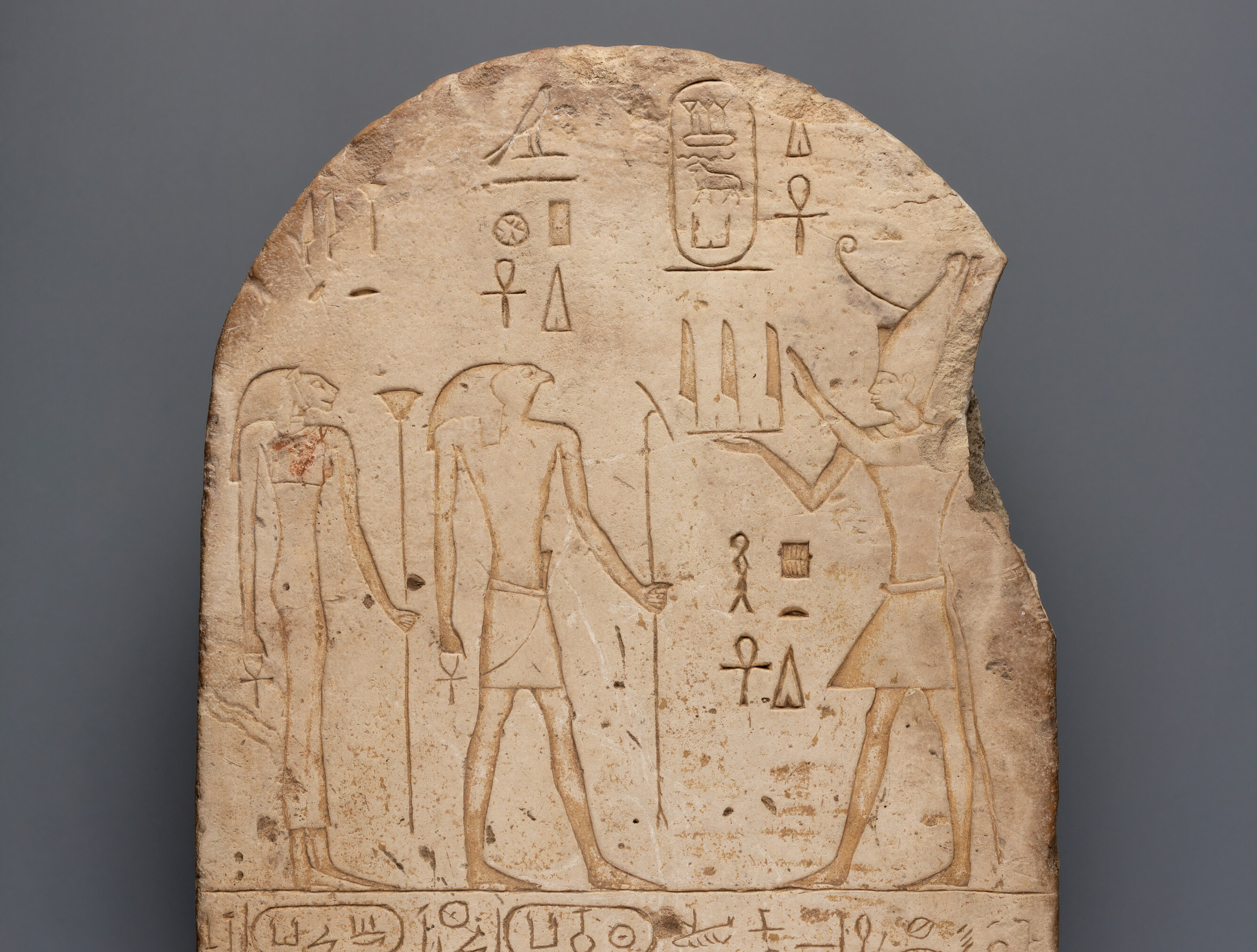
Stela
A stela, plural stelae, is an upright slab of stone carved or inscribed with text, images, or both, set up to record something permanently. Across the ancient Nile Valley, a stela was one of the standard ways to make sure a decree, a victory, a boundary, or a person’s memory outlasted the people who first wrote it down.
One Form, Many Jobs
Stelae did real, varied work in ancient society, not just one kind. Tomb stelae, placed in a burial chapel, recorded a person’s name and titles, often alongside their family. Royal decrees got carved onto stelae specifically because doing so signaled permanence and public visibility, more so than a document that could be lost or altered. Boundary stelae marked the edges of fields, estates, or entire kingdoms, with the exact territory they defined spelled out in the text itself.
Piye’s Victory Stela, recording his conquest of Egypt, and Shabaka’s own donation stela, pictured above, both put that permanence to work for very different purposes, one a military record, the other a religious grant.
Egypt’s Boundary Markers, Set Up Inside Nubia
Stelae carried real political weight at the Egypt-Nubia border specifically, long before Kush existed as an independent kingdom. Middle Kingdom Egyptian pharaohs set up boundary stelae at fortresses like Semna and Uronarti, inside Nubian territory, spelling out where Egyptian control stopped and stating a king’s duty to defend that line. A stone slab, in other words, could function as a legal document and a warning sign at once.
Reading a Stela Today
A stela usually combines a carved scene, often a king or private individual facing a god or receiving offerings, with a block of inscribed text below or around it. That combination is exactly why stelae remain so valuable to historians now. The image alone can establish who is shown and roughly when, while the text, when it survives legibly, can supply names, dates, and events directly in the ancient people’s own words. Read more about what Kush’s own royal stelae actually recorded in Napata: Kush’s First Capital and on Taharqa’s page.

Cite This Work
- APA
- Kush History. (2026). Stela. Retrieved September 28, 2026, from https://kushhistory.com/glossary/stela/
- Chicago
- Kush History. "Stela." Published August 21, 2026. https://kushhistory.com/glossary/stela/.
- MLA
- Kush History. "Stela." Aug 21, 2026, https://kushhistory.com/glossary/stela/.

Researched and written by Sunni. About this site.