 Kush
Kush 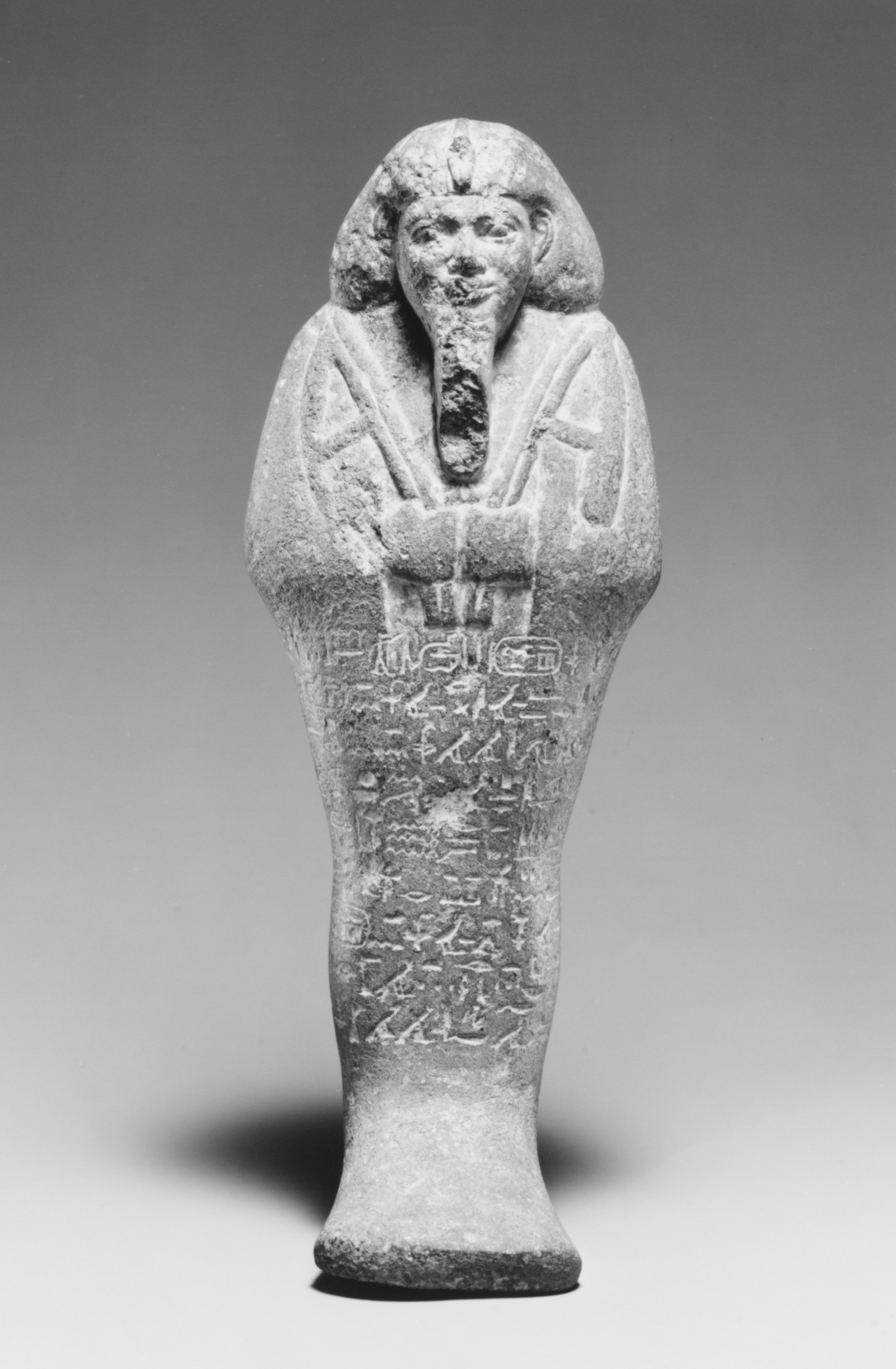
Taharqa
Taharqa ruled Kush and Egypt together from about 690 to 664 BCE, the fourth king of the 25th Dynasty. He appears by name in the Bible as Tirhakah, and he built more across Egypt and Nubia than almost any other Kushite king.
The King the Bible Names
Two books of the Bible name Taharqa directly, calling him Tirhakah, king of Cush. Those mentions come from the Second Book of Kings and the Book of Isaiah, at the exact spots scholars label 2 Kings 19:9 and Isaiah 37:9, a shorthand that just means chapter 19, verse 9, and chapter 37, verse 9. Both passages describe Taharqa marching toward Jerusalem with an army, at the same moment the Assyrian king Sennacherib had the city under siege during the reign of Judah’s King Hezekiah.
That single mention has given Taharqa a level of name recognition among biblical scholars and readers that most Kushite kings never get, independent of anything in Egyptology.
A Timing Puzzle Historians Still Discuss
There’s a real timing problem here, worth walking through directly. Sennacherib’s campaign against Judah is generally dated to 701 BCE. Taharqa’s own inscriptions point to him becoming king in 690 BCE, nine years later.
Most historians solve this by reading the Bible’s use of “king” as the title Taharqa held by the time the text was written down, not necessarily the title he held in 701 BCE itself. Taharqa was still a young prince in 701 BCE, and it’s plausible he commanded troops or held real military power under his predecessor without yet holding the throne. Historians generally agree the passage lines up with Taharqa really being involved in Assyria’s conflict with Egypt during that era, even though the exact title at the exact year remains genuinely debated.
Gaining Egypt Was an Earlier Story
Taharqa did not conquer Egypt himself. By the time he became king in 690 BCE, Kush had already ruled Egypt for decades. That conquest belongs to two kings before him: his own father, Piye, who led the military campaign that first brought Egypt under Kushite control around 727 BCE, and Shabaka, who completed the takeover a few years later. Taharqa inherited an already-unified kingdom rather than building one from scratch.
Did Egyptians Welcome Their Kushite Kings?
Before Kush took over, Egypt had been broken into pieces, ruled by several competing local rulers instead of one strong king. Kush’s pharaohs, starting with Piye and Shabaka and continuing through Taharqa, showed up presenting themselves as the ones bringing order back. The evidence suggests many Egyptians genuinely welcomed that, especially in Thebes, one of Egypt’s most important religious cities.
Kushite kings worked hard to earn that welcome. They gave Kushite princesses a powerful religious job at Thebes called God’s Wife of Amun, which gave the family real influence over southern Egypt. They took on Egyptian royal titles, rebuilt Egyptian temples, and worshipped Egyptian gods like Amun, Ptah, and Osiris right alongside their own gods. At the same time, they kept one clear sign of where they came from. Statues from this period show Kushite kings wearing two cobras, a doubled uraeus, on their crown instead of Egypt’s usual one. Historians connect that second cobra directly to ruling both Kush and Egypt at once.
Builder of Two Kingdoms
Taharqa built and restored temples on both sides of his kingdom, at a scale that outpaced most Kushite kings before or after him. At Karnak in Egypt, he added a large open pavilion, lined with tall stone columns, in front of the Temple of Amun. Part of it still stands today.
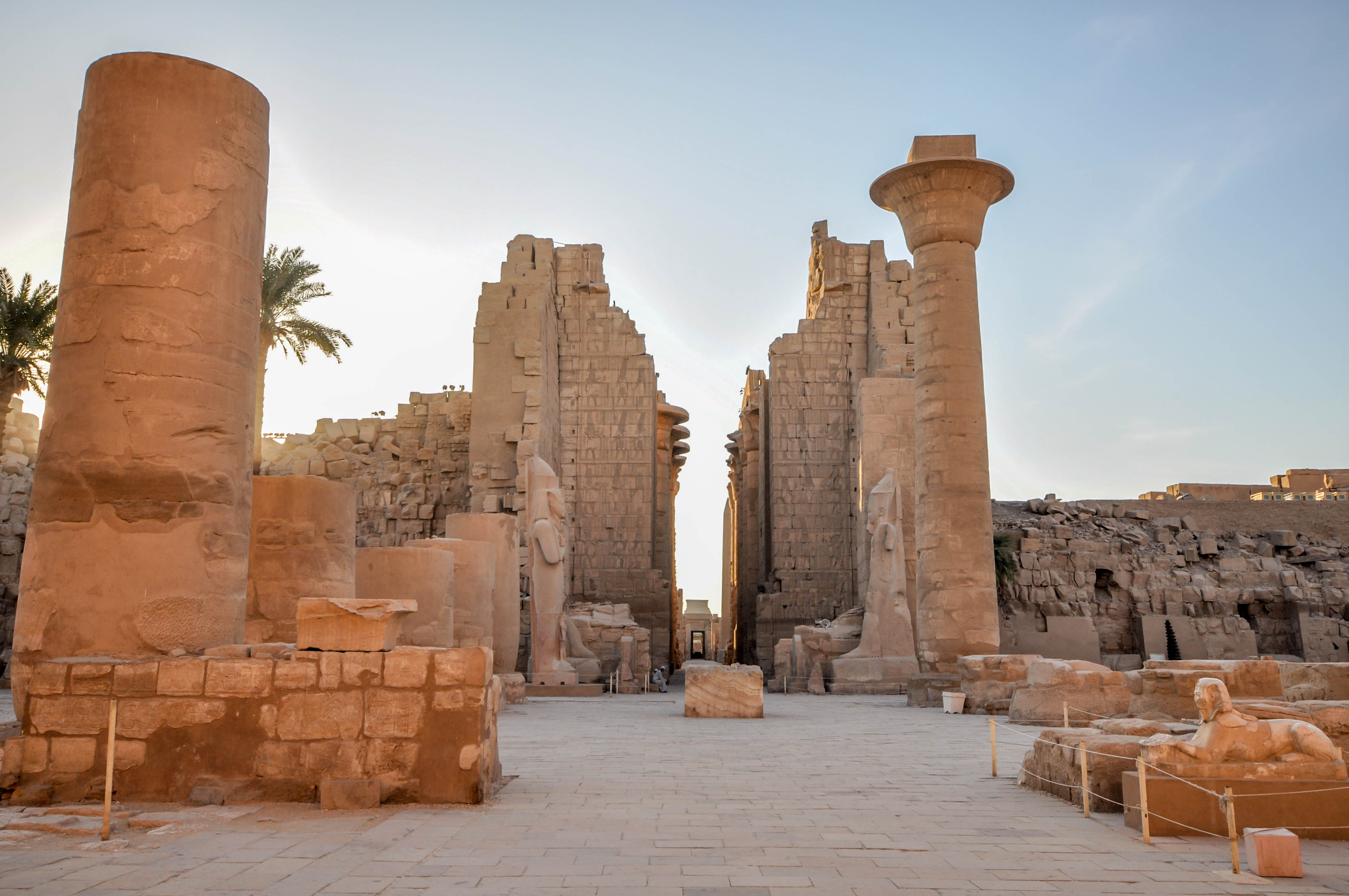
Photo: Jorge Láscar, CC BY 2.0, via Wikimedia Commons.
He expanded temples at Kawa and at Jebel Barkal in Nubia, and inscriptions from his reign describe building work across an unusually wide stretch of territory.
An inscription from his sixth year also describes an unusually high Nile flood, and it frames the flood as good news, calling it “a thoroughly good cultivation,” a sign of abundance and divine favor on his reign. A separate graffito from the same event, written by someone outside the royal court, calls that same flood a disaster instead. Read side by side, the two records offer a rare, honest look at the everyday, unglamorous side of ruling a kingdom built around a river, where a king’s own telling and an ordinary person’s telling of the same event did not have to agree.
Losing Egypt to Assyria
Assyria’s own empire was expanding westward during Taharqa’s reign, and Egypt became a target. Assyrian forces under Esarhaddon invaded in 674 BCE and were driven back at first, a real defeat for Assyria that most people outside of history classrooms have never heard of. Esarhaddon returned in 671 BCE, captured Memphis, and forced Taharqa to retreat south into Nubia.
Taharqa briefly reclaimed Memphis after Esarhaddon’s death, but Esarhaddon’s successor, Ashurbanipal, pushed Kushite forces out of Egypt for good over the following years. Taharqa died in 664 BCE, still ruling Kush itself even after Egypt was gone.
His successor, Tanwetamani, made one more attempt to retake Egypt shortly after Taharqa’s death. Ashurbanipal’s forces answered by sacking Thebes itself in 663 BCE, and Kush’s direct rule over Egypt ended for good soon after.
Buried at Nuri
Taharqa chose Nuri, across the Nile from the older royal cemetery at El-Kurru, as his burial site. His pyramid there is the largest ever built in Nubia, a scale that reflects both his own building ambitions and the wealth of a kingdom that had, for decades, ruled two lands at once.
Taharqa’s story is also part of the deep, documented history behind modern Nile Valley ancestry results. Read what Nubian or Kushite ancestry actually means for a plain explanation of what that connection can and cannot tell you.
Read more about Nuri and Kush’s other pyramid fields in Why Sudan Has More Pyramids Than Egypt, and about the century his family ruled Egypt in The Black Pharaohs: When Kush Ruled Egypt.

Cite This Work
- APA
- Kush History. (2026). Taharqa. Retrieved September 28, 2026, from https://kushhistory.com/rulers/taharqa/
- Chicago
- Kush History. "Taharqa." Published August 16, 2026. https://kushhistory.com/rulers/taharqa/.
- MLA
- Kush History. "Taharqa." Aug 16, 2026, https://kushhistory.com/rulers/taharqa/.
Researched and written by Sunni. About this site.