 Kush
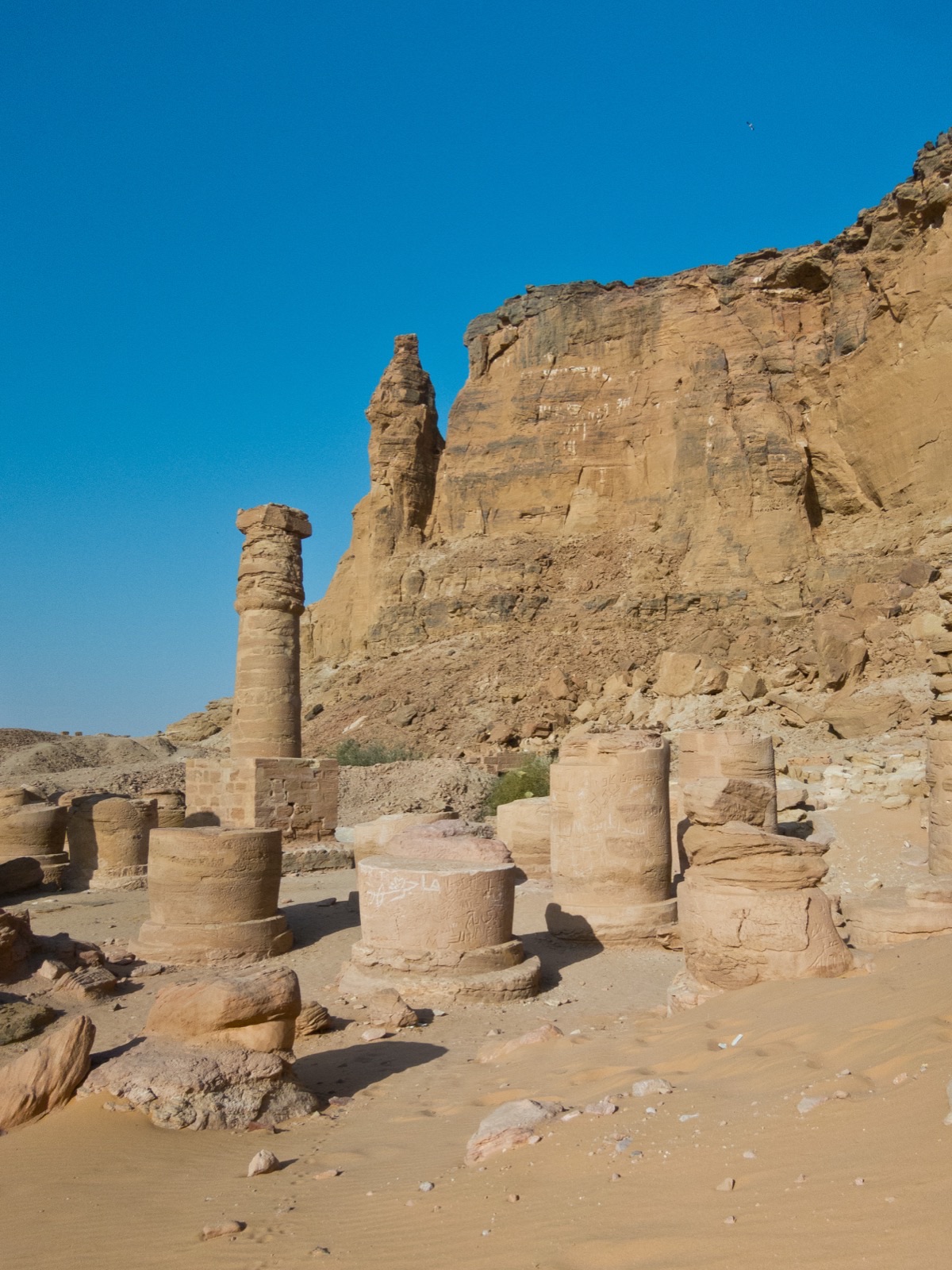
Photo: Mark Fischer, CC BY-SA 2.0, via Wikimedia Commons
Napata vs. Meroë: Kush's Two Capitals Compared
Kush had two capitals. Napata came first, built around a sacred mountain near the Nile’s fourth cataract. Meroë came later, farther south, and became the kingdom’s royal city for its final centuries.
The two cities did different jobs. Napata stayed Kush’s holy city, where kings went to be crowned. Meroë became the place where kings lived, ruled, and were buried. Historians even name the two halves of Kush’s history after them, the Napatan period and the Meroitic period.
At a Glance
Location today
Napata
Near Karima, northern Sudan, at the fourth cataract
Meroë
Near Shendi, about 200 km northeast of Khartoum
Main role
Napata
First capital, then religious center and coronation site
Meroë
Later royal capital
Sacred focus
Napata
Jebel Barkal and its great temple of Amun
Meroë
Amun, plus Kush's own lion god Apedemak
Royal cemeteries
Napata
El-Kurru and Nuri
Meroë
The pyramid fields at Meroë
Landscape
Napata
Desert along the river
Meroë
Edge of the summer rainfall belt, with more grazing land
Royal writing
Napata
Egyptian hieroglyphs
Meroë
Kush's own Meroitic script, in later centuries
Famous rulers
Napata
Piye, Shabaka, Taharqa
Meroë
Amanirenas, Amanishakheto, Natakamani
Attacked by
Napata
Egypt in 593 BCE, Rome around 22 BCE
Meroë
Aksum, in the 300s CE
Napata, the Holy City
Napata grew up around , a flat-topped mountain rising from the desert. Egyptian forces reached it around 1450 BCE. They decided it was a home of their god Amun and built a temple at its foot.
By around 750 BCE, a Kushite kingdom had formed around Napata. Its kings saw themselves as Amun’s true protectors. From here, Piye marched north and conquered Egypt. He and the kings after him ruled Kush and Egypt together, a realm historians call the Double Kingdom.
Napata’s kings were buried nearby, at El-Kurru and later at Nuri. Taharqa lies at Nuri, under the largest pyramid ever built in Nubia.
Meroë, the Royal City
Meroë sits on the Nile’s east bank, far to the south of Napata. It stands in a region the ancient world called the Island of Meroë. That “island” was really a stretch of land bounded by three rivers: the Nile, the Atbara, and the Blue Nile.
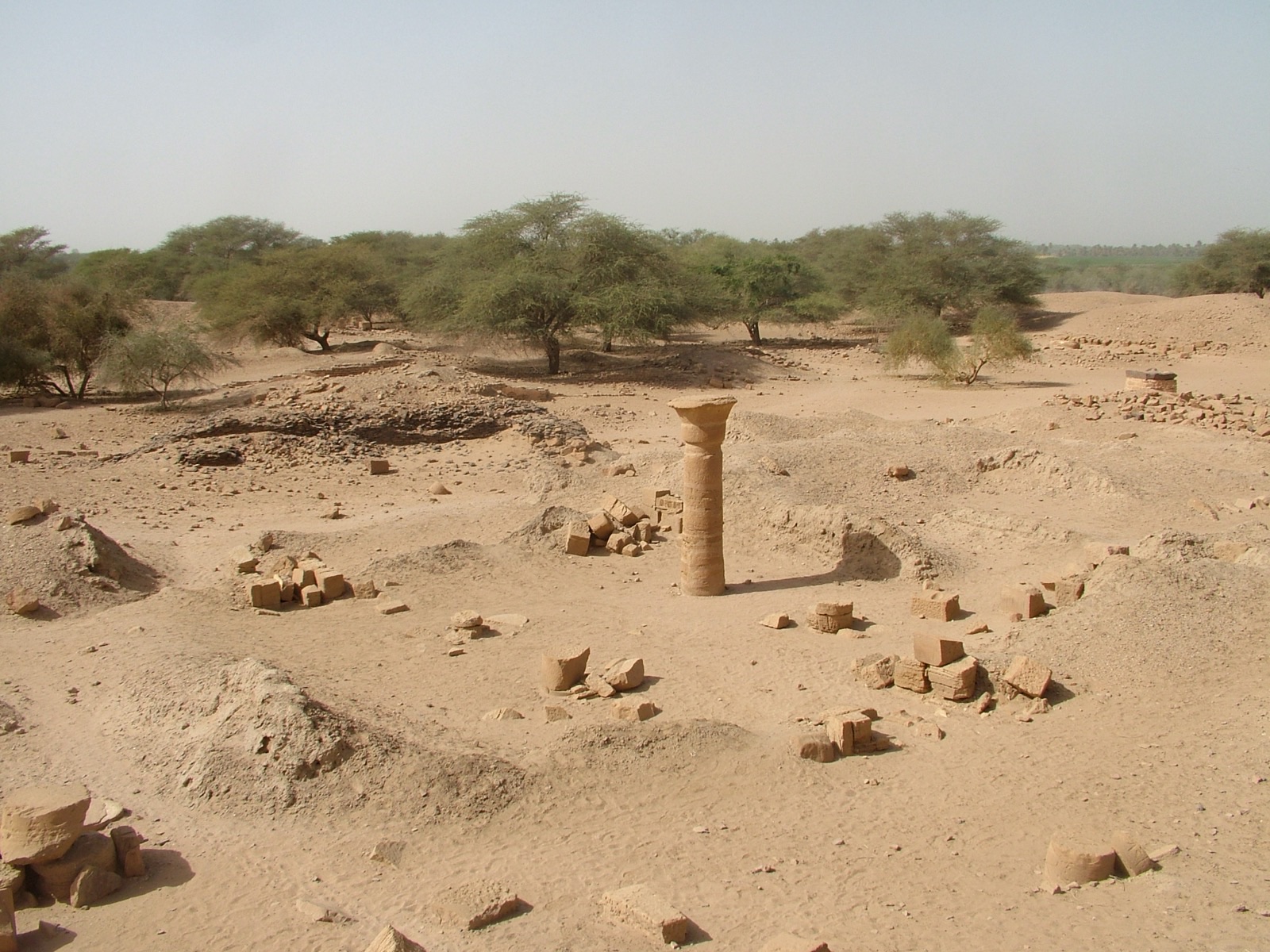
Meroë grew into a city of palaces, temples, and workshops. It worshipped Amun and also Apedemak, a lion-headed war god of Kush’s own. It became a center of iron making, and huge mounds of iron slag, the waste left over from smelting, still stand at the site. Kush’s own Meroitic script came into wide use during these centuries.
Meroë’s pyramid fields hold the later kings and queens of Kush, including Kandakes, the ruling queens Kush gave their own pyramids.
Why Kush Moved South
No single record explains the move, and it seems to have happened in stages. Historians point to a few reasons.
Egypt sacked Napata in 593 BCE. An army sent by the pharaoh Psamtik II looted its temples and smashed royal statues. One view links the shift toward Meroë to the years after that attack.
Meroë also had better land. It sat on the edge of the summer rainfall belt, with more grazing land than the desert around Napata. And it sat farther from Egypt’s army.
The royal burials moved last. Nastasen was the last king buried in Napata’s royal cemeteries, in the 300s BCE. Starting with King Arakamani in the 200s BCE, Kush’s kings were buried at Meroë instead.
Napata Never Lost Its Crown
Napata kept its importance after the kings moved. Its Amun temple stayed the kingdom’s main religious center. Kush’s most important royal ceremony was the coronation, and its grandest version was held at Napata, in front of the sacred mountain.
Napata still drew enemies too. Around 22 BCE, a Roman army under Gaius Petronius marched all the way to Napata and destroyed it, during Kush’s war with Rome under Queen Amanirenas.
Both Cities Today
Both cities are UNESCO World Heritage Sites. Jebel Barkal, its temples, and the cemeteries at El-Kurru and Nuri are listed together near Karima. The Island of Meroë, with its pyramids, royal city, and temples, was listed in 2011.
The two sites tell one story from two ends. Napata shows where Kush’s kings drew their sacred power. Meroë shows where they lived, worked iron, wrote their own language, and built pyramids for another six centuries.
Frequently Asked Questions
What was the capital of the Kingdom of Kush?
Kush had two capitals over its long history. Napata, near the Nile's fourth cataract, came first. Meroë, farther south near modern Shendi, became the royal center later. Napata stayed the kingdom's main religious center even after the kings had moved.
When did Kush move its capital from Napata to Meroë?
Historians are not sure of an exact date, and the move seems to have happened in stages. One view links it to the years after Egypt sacked Napata in 593 BCE. Royal burials shifted to Meroë later, in the 200s BCE, starting with King Arakamani.
Why did Kush move its capital to Meroë?
Meroë sat on the edge of the summer rainfall belt, with more grazing land than the desert around Napata. It also became the center of a large iron industry. Historians also connect the move to Meroë's greater distance from Egypt, whose army had sacked Napata.
Where are Napata and Meroë today?
Napata's ruins stand near the town of Karima in northern Sudan, beside the mountain of Jebel Barkal. Meroë's ruins stand near the city of Shendi, about 200 kilometers northeast of Khartoum. Both are UNESCO World Heritage Sites.
Sources
- Napatan Period — UCLA Encyclopedia of Egyptology
- Meroe and Egypt — Josefine Kuckertz, UCLA Encyclopedia of Egyptology
- In focus: Napatan coronation ceremonies — Sudan Survey, LMU Munich
- Napata — Wikipedia
- Meroë — Wikipedia
- Nastasen — Wikipedia
- Gebel Barkal and the Sites of the Napatan Region — UNESCO World Heritage Centre
- Archaeological Sites of the Island of Meroe — UNESCO World Heritage Centre
Cite This Work
- APA
- Kush History. (2026). Napata vs. Meroë: Kush's Two Capitals Compared. Retrieved October 25, 2026, from https://kushhistory.com/napata-vs-meroe/
- Chicago
- Kush History. "Napata vs. Meroë: Kush's Two Capitals Compared." Published October 19, 2026. https://kushhistory.com/napata-vs-meroe/.
- MLA
- Kush History. "Napata vs. Meroë: Kush's Two Capitals Compared." Oct 19, 2026, https://kushhistory.com/napata-vs-meroe/.
Researched and written by Sunni. About this site.