 Kush
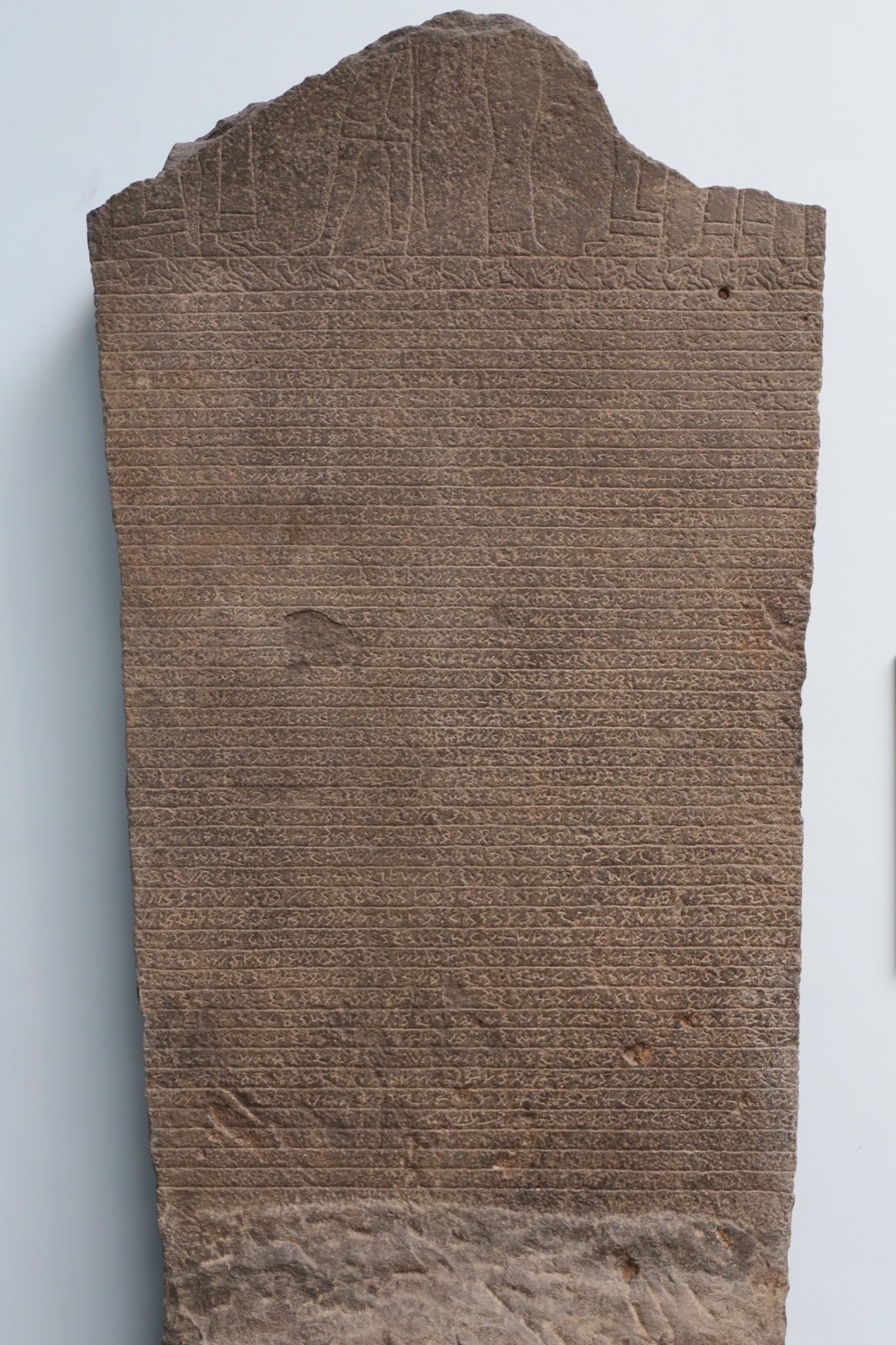
Photo: Pymouss, CC BY 3.0, via Wikimedia Commons
Meroitic Script vs. Egyptian Hieroglyphs: How Kush Wrote Its Own Language
Kush wrote with two different scripts across its history. For centuries, its kings carved royal inscriptions in Egyptian hieroglyphs. Later, Kush built a script of its own called Meroitic, with 23 signs that spell out sounds. Egyptian hieroglyphs used about 900 signs, mixing pictures for whole words with signs for sounds.
Meroitic borrowed its shapes from Egypt. It put them to work in a new way, to write a different language.
At a Glance
Language
Egyptian hieroglyphs
Egyptian
Meroitic script
Meroitic, Kush's own language
In use
Egyptian hieroglyphs
About 3200 BCE to 394 CE
Meroitic script
About the 200s BCE to the 400s CE
Number of signs
Egyptian hieroglyphs
About 900 in the classic period, over 5,000 later
Meroitic script
23
What signs stand for
Egyptian hieroglyphs
Whole words, sounds, and silent meaning hints
Meroitic script
Sounds only
Vowels
Egyptian hieroglyphs
Usually left unwritten
Meroitic script
Partly written, with signs for e, i, and o
Everyday form
Egyptian hieroglyphs
Demotic and earlier cursive scripts
Meroitic script
Meroitic cursive, about 90 percent of surviving texts
Deciphered
Egyptian hieroglyphs
1820s, by Champollion, with the Rosetta Stone
Meroitic script
Sounds worked out by Griffith around 1909
Readable today
Egyptian hieroglyphs
Yes, fully translated
Meroitic script
Sounds yes, meaning only in part
Dates for the start of Meroitic writing vary by source, and the earliest examples are hard to date precisely.
Borrowed Shapes, a New System
Kush’s kings wrote in Egyptian for centuries. When Piye conquered Egypt, he recorded his victory in Egyptian hieroglyphs, in the Egyptian language.
Later, Kush began writing its own language. Scribes took sign shapes from Egyptian writing and gave them new sounds. The result came in two forms. Meroitic hieroglyphs appeared on temples and royal monuments. Meroitic cursive handled almost everything else.
Meroitic cursive grew out of . It is by far the more common form. About 90 percent of all surviving Meroitic inscriptions are written in cursive.
Hundreds of Signs, or Twenty-Three
Egyptian hieroglyphs used about 900 different signs in their classic period. By the time Greeks and Romans ruled Egypt, priests had expanded that to more than 5,000.
Meroitic used 23. Four of them stand for vowels. The rest stand for consonants, plus a few signs for whole syllables.
How the Sounds Work
Egyptian hieroglyphs mixed three kinds of signs. Some stood for whole words. Some stood for sounds. Others were silent and only hinted at a word’s meaning, like a small picture of a man after a man’s name. Egyptian writing usually left vowels out, so scholars still debate exactly how many Egyptian words sounded.
Meroitic signs stood for sounds. Each consonant sign carried a built-in “a” sound unless another vowel sign followed it. Separate signs wrote the vowels e, i, and o. Meroitic also marked the breaks between words with two or three dots, a feature rarely found in ancient writing.
Which Way to Read
Both scripts were usually read from right to left. Egyptian signs that show people or animals face the start of the line, so a reader can tell the direction by looking at which way the figures face.
Meroitic kept that habit on its monuments. Its hieroglyphs ran in columns from top to bottom, with signs facing the start of the text. Meroitic cursive ran in rows from right to left.
Cracking Two Codes
French troops found the Rosetta Stone in Egypt in 1799. It carried the same decree in Egyptian hieroglyphs, Demotic, and Greek. Using that Greek text as a key, the French scholar Jean-François Champollion cracked Egyptian hieroglyphs in the 1820s.
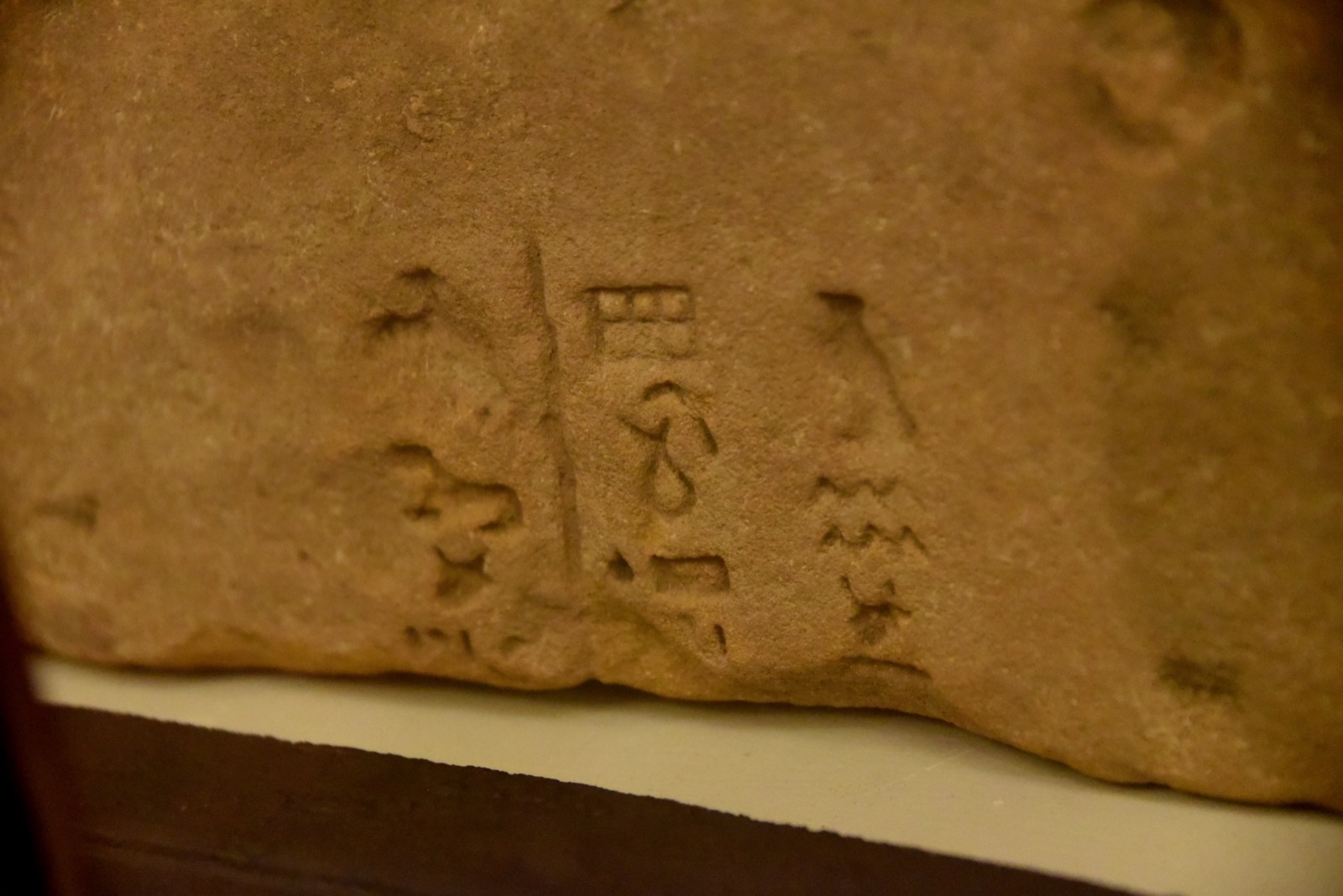
Meroitic had no Rosetta Stone. Around 1909, the British Egyptologist Francis Llewellyn Griffith used an inscription from Wad ben Naga, near Meroë. It wrote the names of a king and a queen twice, once in Egyptian hieroglyphs and once in Meroitic hieroglyphs. Griffith matched the signs to known names, then matched the hieroglyphs to their cursive forms. Step by step, he worked out the sound of every sign.
Knowing the sounds left the bigger problem unsolved. Nobody spoke Meroitic anymore, and no long text in Meroitic and a known language has turned up. Scholars can read names, titles, and some repeated phrases from funeral texts. Most long inscriptions still cannot be translated with confidence.
A Language Family Still Being Argued Over
The French linguist Claude Rilly links Meroitic to a group of languages he calls Northern East Sudanic. That group includes Nubian, still spoken along the Nile today, and several languages spoken in Sudan, Chad, and Eritrea. Rilly compared about 200 words across these languages and found Meroitic closest to Nubian.
The linguist Tom Güldemann has called that evidence promising. Others disagree. The scholar Edward Lipiński argued that much of Meroitic’s known vocabulary looks closer to the Afro-Asiatic family, the family that includes Egyptian and the Semitic languages. The question is still open.
Both Scripts Fade Out
Egypt’s last known hieroglyphic inscription was carved at Philae, near Egypt’s southern border, in 394 CE. The last known Meroitic inscriptions date to the 400s CE. Egypt’s oldest script and Kush’s own script fell silent within about a century of each other.
One of the longest Meroitic texts to survive is the Hamadab Stela, pictured above. The archaeologist John Garstang found it near Meroë in 1914. Its 42 lines of cursive name Queen Amanirenas and Akinidad, and some scholars have proposed that it marks a Kushite raid on Roman Egypt. Read the story of that war in Amanirenas: The Queen Who Fought Rome and Won.
Frequently Asked Questions
Did Kush use Egyptian hieroglyphs?
Yes, for centuries. Kushite kings carved their royal inscriptions in Egyptian hieroglyphs, in the Egyptian language. Later, Kush began writing its own language in a new script called Meroitic, which borrowed its sign shapes from Egyptian writing.
Can anyone read Meroitic today?
Partly. Scholars can sound out Meroitic writing, because the value of each sign was worked out more than a century ago. The language underneath is still mostly not understood. Names, titles, and some repeated phrases can be read, but most long texts cannot be translated with confidence.
How many letters does the Meroitic script have?
Meroitic has 23 signs, including four vowel signs. Egyptian hieroglyphs used about 900 signs in their classic period, and more than 5,000 by the time Greeks and Romans ruled Egypt.
Who deciphered the Meroitic script?
The British Egyptologist Francis Llewellyn Griffith worked out the sounds of the Meroitic signs around 1909. He used an inscription from Wad ben Naga, near Meroë, that wrote the names of a king and a queen in both Egyptian and Meroitic hieroglyphs.
Sources
- Meroitic script — Wikipedia
- Egyptian hieroglyphs — Wikipedia
- The Meroitic Mystery — AramcoWorld, March/April 1983
- Karanog: The Meroitic Inscriptions of Shablul and Karanog — F. Ll. Griffith, University of Pennsylvania (1911)
- Meroitic — Claude Rilly, UCLA Encyclopedia of Egyptology
- Northern Eastern Sudanic languages — Wikipedia
- Hamadab Stela — Wikipedia
- Review of Rilly, Le méroïtique et sa famille linguistique — Edward Lipiński, Rocznik Orientalistyczny (2011)
Cite This Work
- APA
- Kush History. (2026). Meroitic Script vs. Egyptian Hieroglyphs: How Kush Wrote Its Own Language. Retrieved October 25, 2026, from https://kushhistory.com/meroitic-script-vs-egyptian-hieroglyphs/
- Chicago
- Kush History. "Meroitic Script vs. Egyptian Hieroglyphs: How Kush Wrote Its Own Language." Published October 19, 2026. https://kushhistory.com/meroitic-script-vs-egyptian-hieroglyphs/.
- MLA
- Kush History. "Meroitic Script vs. Egyptian Hieroglyphs: How Kush Wrote Its Own Language." Oct 19, 2026, https://kushhistory.com/meroitic-script-vs-egyptian-hieroglyphs/.
Researched and written by Sunni. About this site.