 Kush
Kush 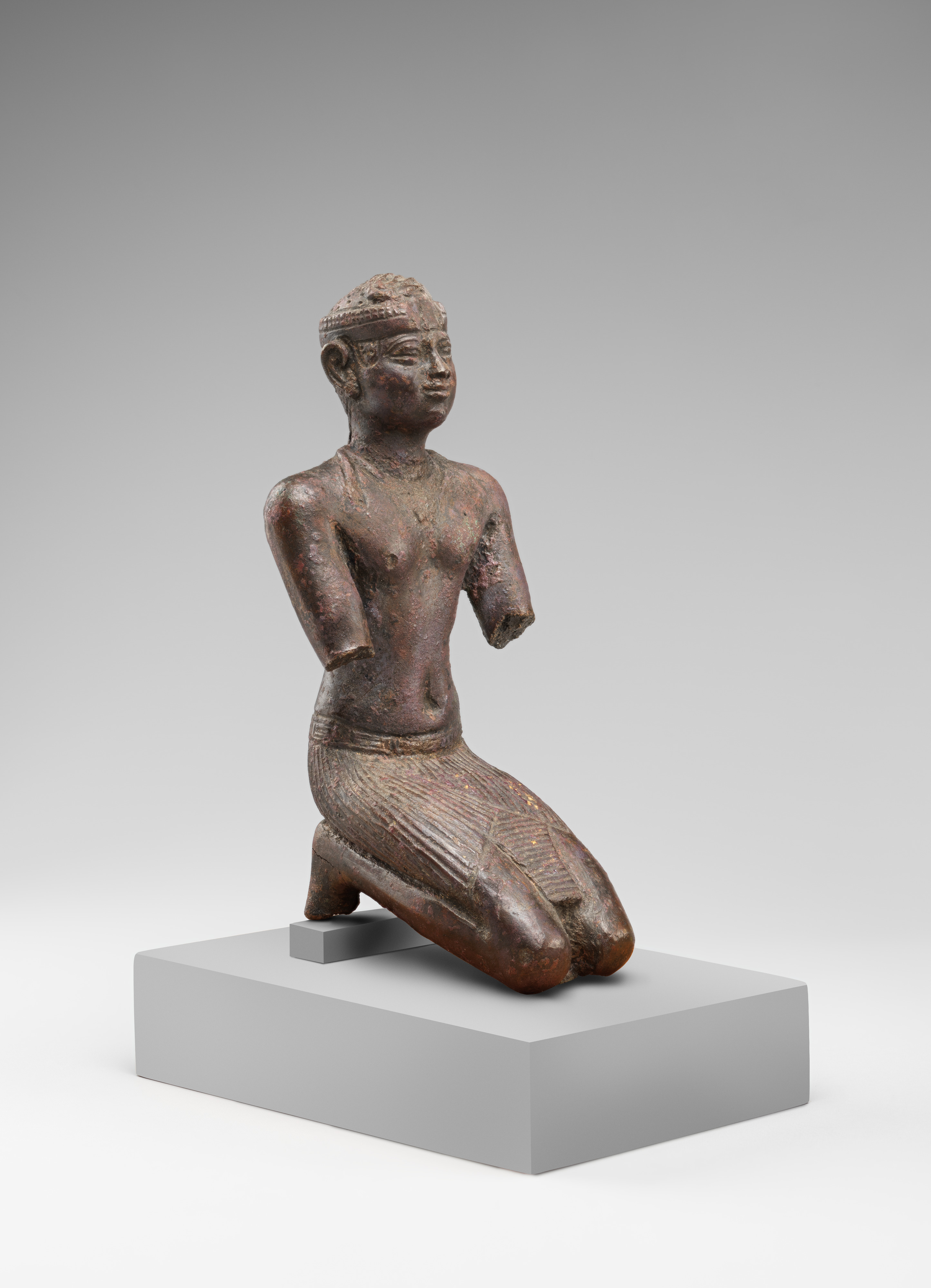
Rich vs. Poor in Ancient Kush: Life Across the Social Hierarchy
Kush held many different lives under one crown. A king or Kandake lived surrounded by gold and imported goods. A farmer a few miles away might never own a single imported object in their life. Kush’s society sat on a clear ladder, and where a person landed on it shaped almost everything else about how they lived.
This walk down that ladder, from top to bottom, uses what the archaeological and historical record actually shows at each level. Some rungs are far better documented than others, and the gaps get named plainly rather than papered over.
Kings and Kandakes
At the top sat the king, and often a Kandake ruling beside him or in her own right.
The next Kushite king was not always the last king’s son. Inscriptions describe a new king being chosen from among royal family members by the priests of the god Amun, who said the choice came from the god himself. Once in power, a king led military campaigns, commissioned temples and his own pyramid, and stood as the main link between the gods and the kingdom.
Kandakes held real political and military power. Several ruled independently, with no king at all. , who led an army against Rome, is the clearest example. Kushite art often shows a Kandake at the same scale as a king and carrying weapons, a real contrast with Egypt, where queens were almost always shown smaller than the pharaoh beside them. Royalty of either kind lived in the kingdom’s major cities, wore gold jewelry, and were buried with grave goods reflecting their rank.
Nobles, Priests, and Scribes
Below royalty sat a layer of nobles who kept the kingdom running: regional governors, military commanders, high priests, and scribes.
Scribes held a genuinely valuable skill. Kush developed its own writing system, the Meroitic script, used for royal inscriptions and administrative records. Reading and writing in it required years of training, which made literate scribes essential to running temples, tracking trade, and recording royal decrees.
Some non-royal elite burials cluster near the royal pyramid fields, which points to real wealth and status among this group. Exactly how nobles spent their days is less well documented than what survives for kings and queens, and the record doesn’t support guessing at those details.

Artisans, Merchants, and Farmers
Most Kushites fell into this middle layer, and it covered a wide range of lives.
Meroë in particular ran a large iron industry. Archaeologists have found big mounds of iron slag still standing at the site, real proof of large-scale metalworking. Some historians even compare Meroë’s role in ancient African ironworking to a modern factory town. Potters, jewelers, and metalworkers produced goods both for local use and for trade.
Merchants moved gold, ivory, ebony, and incense along the Nile and desert caravan routes connecting Kush to Egypt, the Mediterranean, and the African interior. Farmers, who made up the largest share of the population, grew sorghum and millet and kept cattle, goats, and sheep along the fertile land beside the Nile.
What Skeletons Reveal
Scientists who study ancient bones get a more honest look at Kush’s hierarchy than royal inscriptions alone provide. Skeletons from ordinary burial sites tell a different story than royal ones do.
The clearest large-scale skeletal study comes from a different period, worth being precise about. Michigan State University researchers, working with remains excavated by the Sudan Archaeological Research Society and the British Museum, studied more than 400 skeletons from Mis Island, on the Nile’s Fourth Cataract, and found signs of scurvy, tuberculosis, and many babies dying young among people buried without fine grave goods. That population lived under the medieval Christian kingdom of Makuria, centuries after Kush itself had ended. It is direct evidence about that later population specifically, a distinct group from Kushite-era people despite sharing the same stretch of the Nile. What it does show is the kind of gap between royal and ordinary health that can open up along this same stretch of the Nile under any of the kingdoms that ruled it, Kush included, even without equivalent skeletal data from the Kushite period itself. Royal burials, in both eras, show none of these signs, and came with imported goods and fine craftsmanship instead.
The bones make plain what the inscriptions leave out. Kush’s wealth did not reach everyone the same way.
Why Wealth and Diet Did Not Match
A wealthy kingdom and a well-fed population are two different things, and Kush is a clear example of the gap between them.
Kush’s gold, ivory, and trade income flowed mainly to the crown, the temples, and the elite around them. That income paid for pyramids, gold jewelry, and grand monuments. A farming family a few miles from the capital still lived or went hungry by that year’s Nile flood, regardless of how much gold sat in the royal treasury. Across the ancient world, a wealthy state often sat beside a poor countryside. Kush followed that same pattern.
Women’s Power and Everyday Life
Kush’s ruling women held real, working authority. Several Kandakes ruled without a king at all, led armies, and appear in art at the same scale as kings, carrying weapons rather than standing quietly beside a husband.
What life looked like for women outside the royal family is far less documented. No surviving source describes ordinary Kushite women’s legal rights, property ownership, or daily routines in detail. It would be easy to guess based on neighboring Egypt, where women could own property and end a marriage themselves, but assuming Kush worked exactly the same way would be a plausible-sounding guess without real evidence behind it. What can be said honestly is that the top of Kush’s hierarchy did not exclude women from real power, at a level Egypt’s own history rarely matched.
Servants and the Enslaved
At the bottom of Kush’s hierarchy were servants and enslaved people. Royal inscriptions from military campaigns record the capture of prisoners, and some households, temples, and estates likely relied on their labor.
Across the ancient Nile Valley and the wider Mediterranean world, people typically became enslaved through capture in war, through debt, or by being born to an enslaved parent within a specific household, and the exact terms varied by society and by era. Some ancient systems offered a path back to freedom, through debt repayment or a master’s decision to free someone; others did not. American slavery before the Civil War worked on a different basis: race defined who could be enslaved, and the law treated that status as permanent and passed automatically to children.
Which of those patterns applied inside Kush specifically is not something the surviving evidence answers with confidence. What is documented is narrower: war captives taken during Kushite military campaigns, and Kush’s own economy at Meroë and elsewhere likely relying on forced labor to some degree, the way most ancient states did. Whether that status passed to a person’s children, whether a way back to freedom existed, and how captives were treated day to day are real, open questions. Where the sources are silent, that gap stays open rather than getting filled with a plausible-sounding guess.
What Held It Together
Kush’s ladder ran from a king or Kandake surrounded by gold, down through scribes and craftspeople, to farmers working the same Nile floodplain their families had worked for generations, down to servants and captives whose names did not survive. Every level of it left something behind for archaeologists to find, even when what survived is uneven.
That same ladder crossed a border too. Intermarriage between Nubians and Egyptians is documented as far back as Egypt’s Fourth Dynasty, reaching every rung of the ladder just described, ordinary households and royal diplomatic matches alike.
If a DNA result ever pointed you toward this part of the world, what Nubian or Kushite ancestry actually means is the place to start.

Sources
- Napatan Period — UCLA Encyclopedia of Egyptology
- Meroitic Writing — Claude Rilly, UCLA Encyclopedia of Egyptology
- Queenship in Kush: Status, Role and Ideology of Royal Women — Angelika Lohwasser, Journal of the American Research Center in Egypt 38 (2001)
- Ancient Nubians: A Hard Life — Michigan State University Today (Angela Soler's bioarchaeological research with the British Museum)
- Nubian Art — Museum of Fine Arts, Boston
Cite This Work
- APA
- Kush History. (2026). Rich vs. Poor in Ancient Kush: Life Across the Social Hierarchy. Retrieved September 28, 2026, from https://kushhistory.com/culture/rich-vs-poor-in-ancient-kush/
- Chicago
- Kush History. "Rich vs. Poor in Ancient Kush: Life Across the Social Hierarchy." Published August 16, 2026. https://kushhistory.com/culture/rich-vs-poor-in-ancient-kush/.
- MLA
- Kush History. "Rich vs. Poor in Ancient Kush: Life Across the Social Hierarchy." Aug 16, 2026, https://kushhistory.com/culture/rich-vs-poor-in-ancient-kush/.
Researched and written by Sunni. About this site.