 Kush
Kush 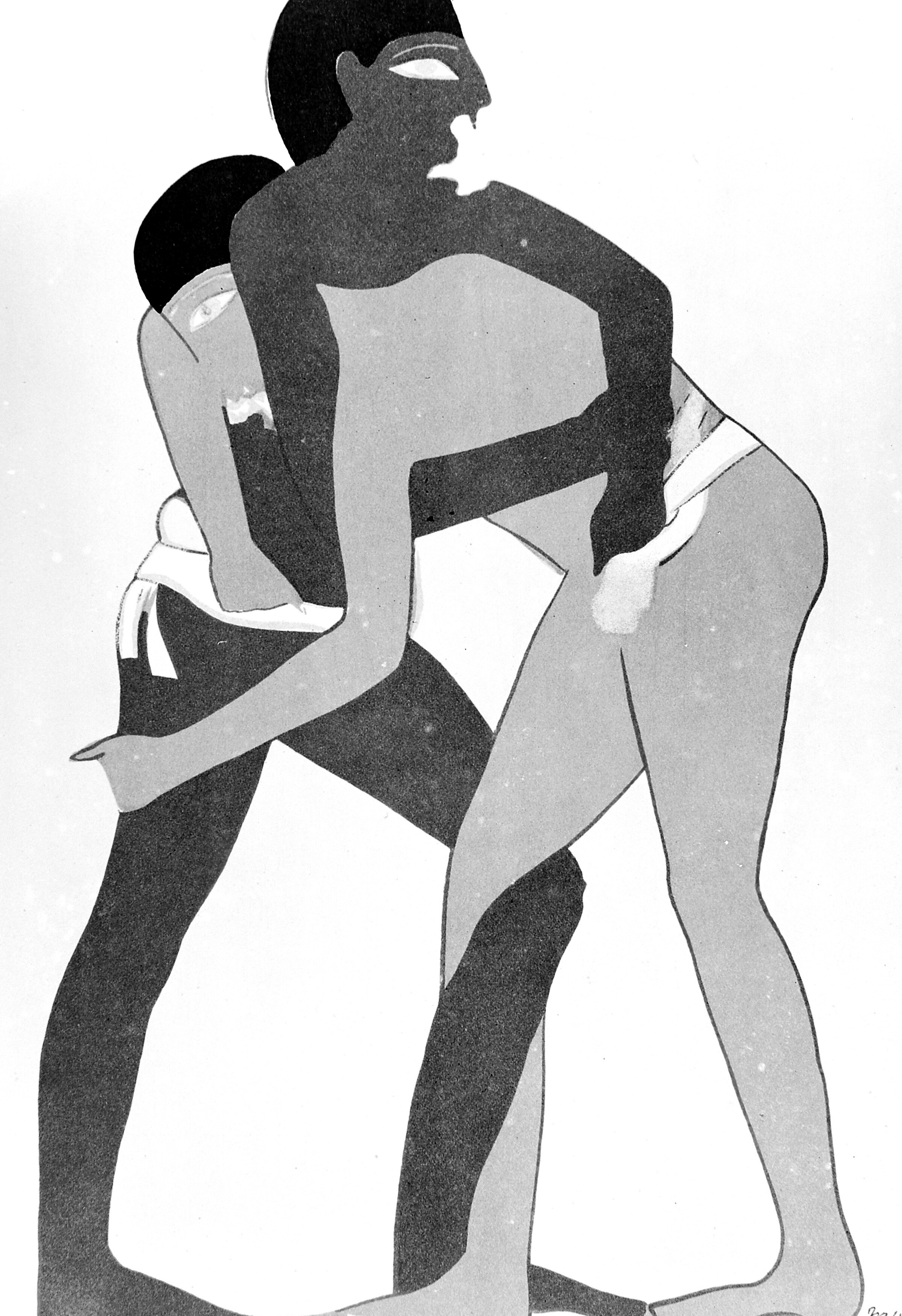
Photo: Wellcome Collection, CC BY 4.0, via Wikimedia Commons
How Did Ancient Nubians Have Fun? Music, Dance, and Sport in Kush
Ancient Nubians played music, danced at celebrations, wrestled, and kept board games close enough to want them in their own royal tombs. The real evidence for how people in Kush spent their free time is thinner than the evidence for kings and wars, but it is real, and it points to a people who valued rhythm, competition, and play.
Music and Dance
Drums, harps, and lyres show up across the archaeological and artistic record of ancient Nubia. Celebrations brought rhythmic drumming and dancing, the kind of shared, physical, communal music-making that leaves a mark on a culture long after the instruments themselves decay.
One instrument has a genuinely direct line to today. The kissar, a traditional Nubian lyre with a wooden bowl body and a sheepskin soundboard, is still played in Sudan, Egypt, Eritrea, and Ethiopia. An instrument that survived this long, in something close to its original form, says something real about how deeply music was woven into daily life along this stretch of the Nile.
Wrestling
The clearest evidence for wrestling comes from an Egyptian tomb at Beni Hasan, painted around 2000 BCE, centuries before the Kingdom of Kush itself existed. Its walls show hundreds of paired wrestlers locked in detailed, technical holds, including matches between Egyptian and Nubian competitors. This predates Kush, so it counts as direct evidence about Nubian peoples generally, from centuries before Kush existed as a kingdom. It shows that wrestling was already a recognized, skilled contest among Nubians well before Kush rose as a state, the kind of deep regional root a later kingdom would naturally have inherited.
Wrestling in this same part of Sudan never really stopped. Nuba wrestling, practiced today by communities in Sudan’s Nuba Mountains, remains a living, thriving tradition, complete with organized matches that draw large crowds. That’s worth knowing as a separate, modern fact, since no direct evidence connects the two into one unbroken line. Together, though, the ancient tomb paintings and the modern tradition show a sport with genuinely deep roots in this region.
Board Games
Kushite royal tombs at El-Kurru held something surprising: game pieces, buried alongside kings and queens who ruled between about 760 and 656 BCE. Some of what was found looks like Senet, the well known Egyptian board game, but with decoration that breaks from standard Egyptian designs. Kushites who kept Senet boards adapted the game into something with its own local style.
A second game shows up in these same tombs, one game historians call fifty-eight holes, better known by its older name, Hounds and Jackals. Its board holds two rows of 29 holes, and its playing pieces are small pegs topped with jackal or dog heads. This particular game was popular in Mesopotamia during this period, hundreds of miles to the east. Its presence in a Kushite royal tomb is real evidence of cultural contact reaching well beyond Egypt alone.
A Fuller Picture, With Real Limits
Not every part of daily entertainment left equally strong evidence behind. Lions and elephants appear often in Kushite religious art, including scenes of the god Apedemak holding both animals by a rope at his temple at Musawwarat es-Sufra, and warriors likely trained partly through hunting. That evidence points more clearly to religious symbolism and military training than to hunting as simple recreation, worth naming as a related but separate thread rather than folded into “fun” without stronger direct support.
What music, wrestling, and games in Kush share is real, physical evidence: an instrument still played today, a wrestling tradition still practiced in the same region, and actual game pieces buried with actual Kushite kings. Curious what daily life looked like across Kush’s social ladder more broadly? Read Rich vs. Poor in Ancient Kush.
Cite This Work
- APA
- Kush History. (2026). How Did Ancient Nubians Have Fun? Music, Dance, and Sport in Kush. Retrieved September 28, 2026, from https://kushhistory.com/culture/how-did-ancient-nubians-have-fun/
- Chicago
- Kush History. "How Did Ancient Nubians Have Fun? Music, Dance, and Sport in Kush." Published August 21, 2026. https://kushhistory.com/culture/how-did-ancient-nubians-have-fun/.
- MLA
- Kush History. "How Did Ancient Nubians Have Fun? Music, Dance, and Sport in Kush." Aug 21, 2026, https://kushhistory.com/culture/how-did-ancient-nubians-have-fun/.
Researched and written by Sunni. About this site.