 Kush
Kush vs. Egypt: Who Influenced Whom?
Did Egypt shape Kush, or did Kush shape Egypt? Both, at different times. The two lived side by side on the Nile for about three thousand years. Sometimes Egypt held the upper hand, and sometimes Kush did. Ideas, gods, soldiers, and art moved in both directions.
Two popular claims overshoot the evidence. One says Kush was a copy of Egypt. The other says Egypt’s civilization came from Nubia. The real record is more interesting than either. Here it is, era by era.
Which Way Influence Flowed, at a Glance
- Around 3100 BCE: close contact and trade. Scholars still argue over the royal symbols found at Qustul.
- Around 2000 BCE: Nubian archers served in Egypt’s armies.
- About 2500 to 1500 BCE: Kerma built its own kingdom, its own way, and raided Egypt.
- About 1500 to 1070 BCE: Egypt ruled Nubia and planted its gods and temples there.
- About 727 to 656 BCE: Kush ruled Egypt and revived Egypt’s own oldest traditions.
- After 656 BCE: Kush kept Egyptian forms but made its own script and gods central.
Around 3100 BCE: The Qustul Debate
Long before the Kingdom of Kush, a people archaeologists call the A-Group lived in Lower Nubia. They traded with the people of early Egypt, sending raw materials such as ivory, ebony, and incense north. Egyptian goods turned up in A-Group graves.
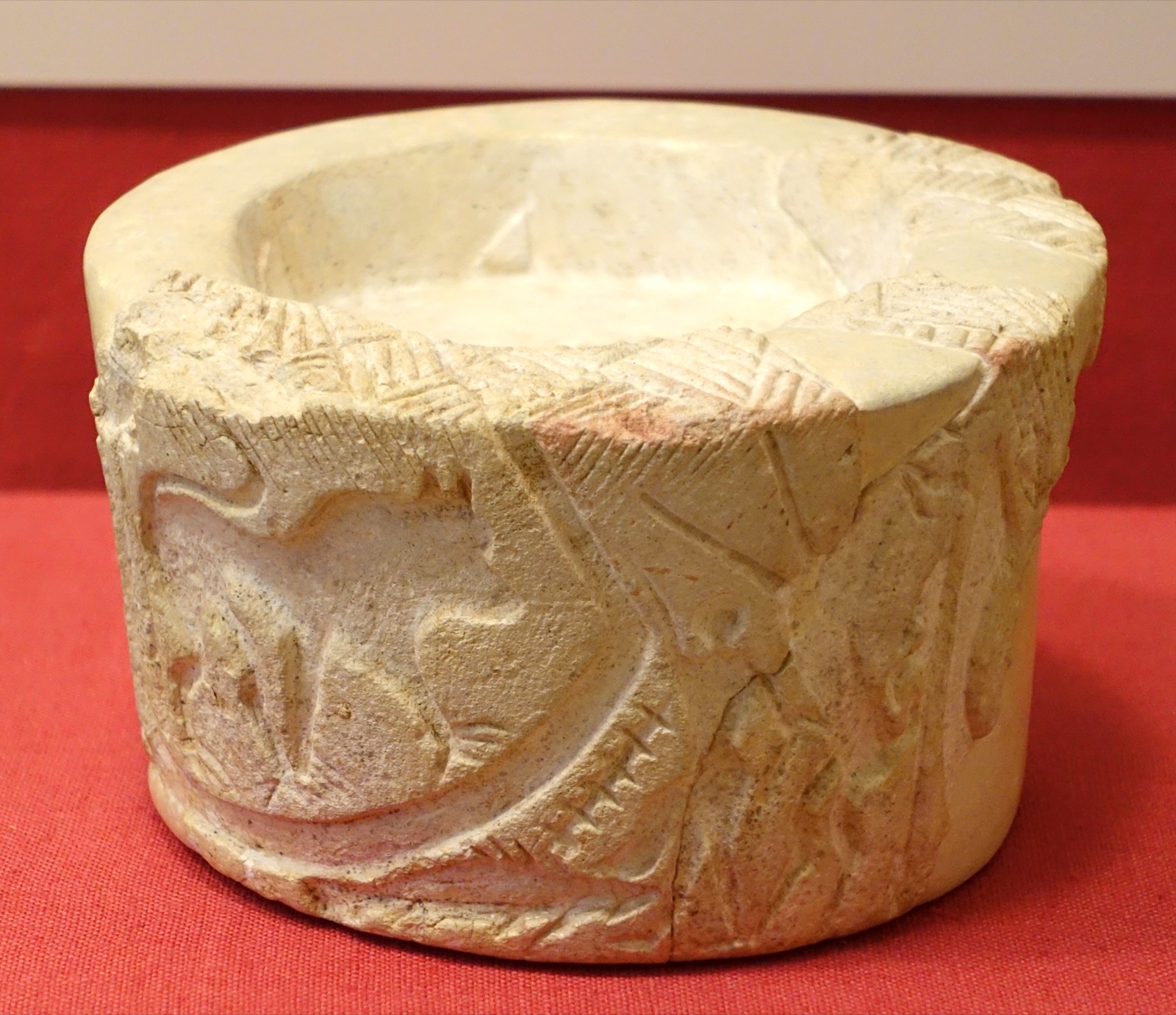
At Qustul, a cemetery of A-Group rulers held a carved stone incense burner, shown above. One of its images resembles the White Crown, a symbol of Egyptian kingship. In the 1980s, the archaeologist Bruce Williams argued that Egypt’s founding royal dynasty may have come from near Qustul.
Most scholars disagree. Later finds at Abydos, in Egypt, suggest that Egyptian kingship is older than the Qustul tombs. Some scholars think Qustul’s rulers borrowed Egyptian royal symbols. The Egyptologist Kathryn Bard wrote that “most scholars do not agree with this hypothesis.” A minority view survives. The historian Christopher Ehret argued in 2023 that Qustul’s elites took part in shaping early pharaonic culture, alongside communities in Egypt.
The honest summary: the two cultures were in close contact as Egypt’s kingship formed. The evidence does not show that Egypt’s kingship came from Nubia. Qustul now lies under Lake Nasser, so new digging there is impossible.
Around 2000 BCE: Nubian Archers in Egypt’s Army
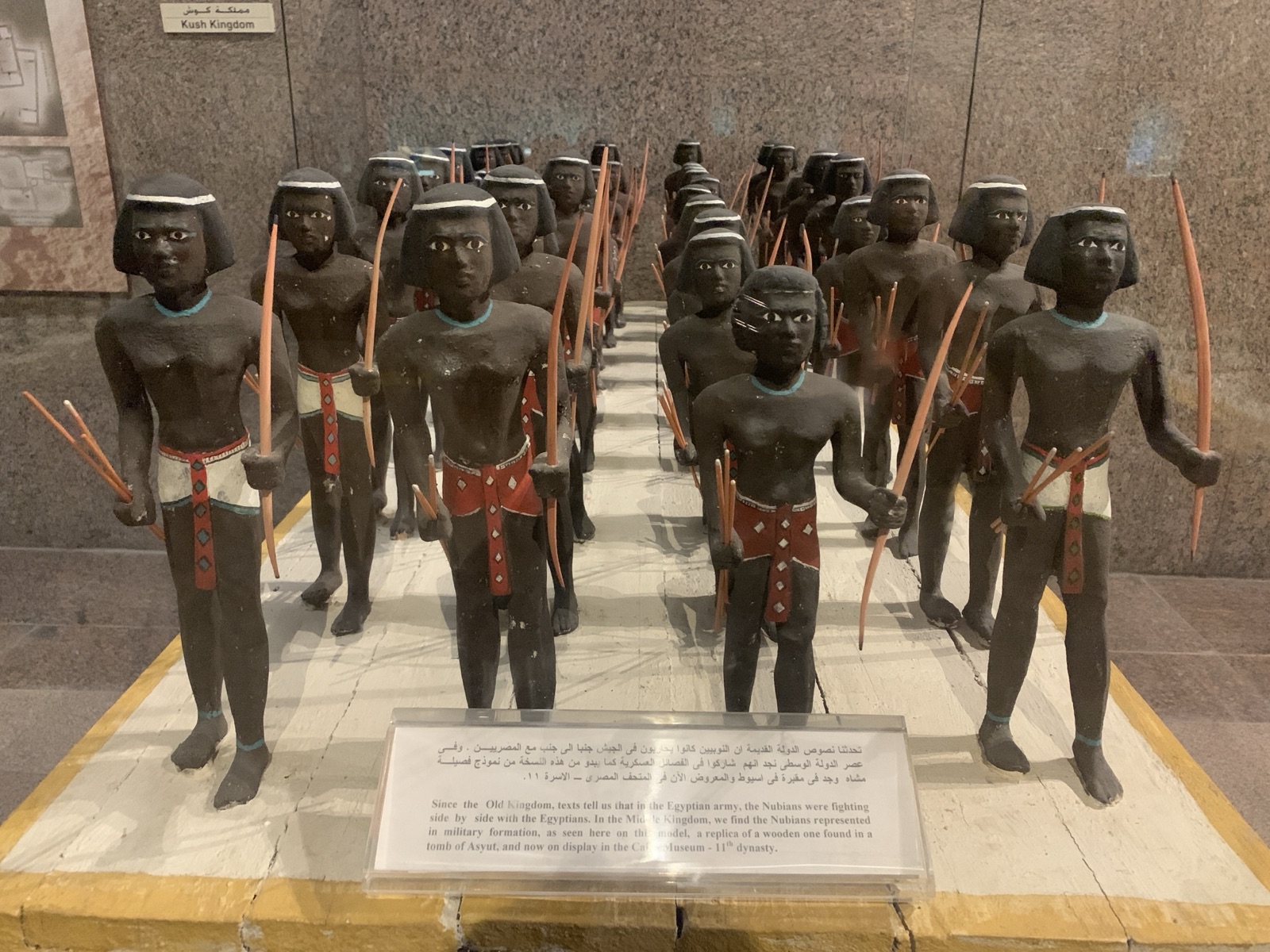
Egyptians called Nubia Ta-Seti, the Land of the Bow. Nubian archers had a strong reputation, and Egypt put that skill to work. The tomb of Mesehti, an Egyptian governor buried at Asyut around 2000 BCE, held a wooden model of forty Nubian archers marching in rows, bows in hand.
Another group, the Medjay, were herders from the desert east of the Nile in Nubia. Egypt hired them as soldiers. They fought in Egypt’s war to drive out the Hyksos, foreign kings who held northern Egypt. By the New Kingdom, the word Medjay had become the name of an elite police force guarding royal sites around Thebes. A Nubian people’s name became an Egyptian job title.
About 2500 to 1500 BCE: Kerma Goes Its Own Way
The first great kingdom of Kush grew up at Kerma. It built in mud brick on a huge scale, buried its kings under giant round mounds, and made its own distinctive pottery. Early archaeologists assumed Kerma was an Egyptian outpost. Later excavation showed it was an independent kingdom with its own customs.
Kerma also pushed back against Egypt. An Egyptian governor named Sobeknakht wrote in his tomb that Kushite raiders reached the Egyptian town of Elkab around 1550 BCE and carried off loot. Kerma also made common cause with Egypt’s enemies. Egyptian soldiers caught a messenger carrying a letter from the Hyksos king to the ruler of Kush, asking for help against the Egyptian king Kamose.
About 1500 to 1070 BCE: Egypt Rules Nubia
Egypt ended the Kerma kingdom around 1500 BCE and ruled Nubia for about four centuries. This is the era of Egypt’s deepest influence on Kush.
Egypt built temples across Nubia. The most important stood at Jebel Barkal, a mountain near Napata that Egyptians believed was a birthplace of the god Amun. Local elites took up Egyptian titles, dress, and burial customs. Some lived in both worlds at once. A Nubian chief named Heqanefer had himself painted as an Egyptian official in his own tomb, and in full Nubian dress in the tomb of Huy, the Egyptian viceroy who governed Nubia, as told in The Gold of Kush.
When Egypt’s empire in Nubia collapsed around 1070 BCE, Amun stayed. The temple at Jebel Barkal outlasted the empire that built it, and Kush’s own kings later made Amun the center of their rule.
About 727 to 656 BCE: Kush Rules Egypt
Then the direction flipped. Around 727 BCE, the Kushite king Piye marched north and conquered a divided Egypt. His family ruled Egypt as its 25th Dynasty, the era told in The Black Pharaohs: When Kush Ruled Egypt.
Kush’s kings did something surprising with that power. They looked back to Egypt’s own distant past. Their artists revived styles from much older periods of Egyptian art. Historians call this return to the past archaism. The Kushite kings also restored old monuments and temples in Egypt.
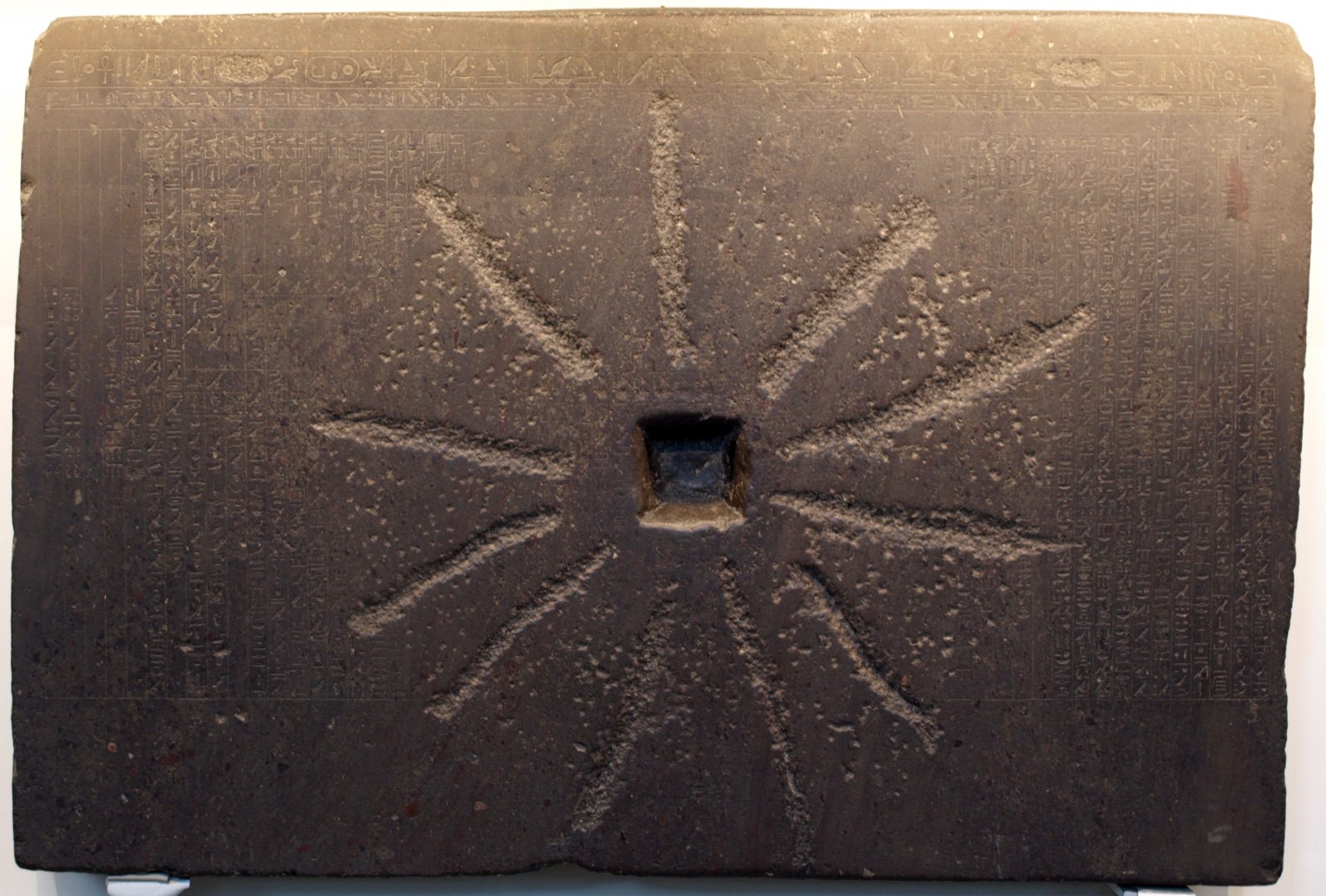
The best example is the Shabaka Stone. The Kushite pharaoh Shabaka had an old religious text about the god carved into stone. The inscription says he copied it from a worm-eaten papyrus he found in Ptah’s temple at Memphis. Early scholars took the text as genuinely ancient. Most scholars now date its composition much later, possibly to Shabaka’s own reign. Either way, a Kushite king presented himself as the rescuer of Egypt’s oldest wisdom.
Kush also brought something old back to Egypt’s royal tombs. Egypt’s last royal pyramid was built around 1550 BCE. About eight centuries later, Kushite kings began burying themselves under pyramids again. They borrowed the form and changed it, building smaller and steeper. See the differences in Nubian Pyramids vs. Egyptian Pyramids.
Kushite pharaohs added their own touches too. Egyptian kings wore one cobra, a uraeus, at the front of the crown. Kushite kings wore two.
After 656 BCE: Kush Makes It Its Own
After Kush lost Egypt, its kings kept ruling from Napata and later Meroë for nearly a thousand years. Egyptian forms stayed: Amun, temple layouts, hieroglyphs for royal monuments. But Kush made more and more of its culture its own.
Kush created its own script, Meroitic, to write its own language. It grew out of Egyptian signs but works very differently, as explained in Meroitic Script vs. Egyptian Hieroglyphs. Meroë’s temples honored Apedemak, a lion-headed war god of Kush’s own, alongside Amun.
What Gets Exaggerated on Both Sides
Scholars of the early 1900s often assumed that great buildings in Africa south of Egypt needed an Egyptian teacher. George Reisner, who dug at Kerma, called it an Egyptian outpost. Later excavation proved Kerma was an independent kingdom. That old assumption still echoes whenever Kush is called a mere copy of Egypt.
The opposite claim, that Egypt’s civilization came from Nubia, also goes past the evidence. The Qustul argument is the strongest version of it, and most scholars find it unconvincing.
The record supports something better than either story: two neighbors who borrowed, fought, traded, and ruled each other for three thousand years, each leaving a mark on the other.
Frequently Asked Questions
Did Egypt influence Kush, or did Kush influence Egypt?
Both, and the balance shifted over time. Egypt shaped Kush's religion, writing, and royal pyramids. Kush supplied soldiers to Egypt's armies for centuries, and Kushite pharaohs revived old Egyptian traditions when they ruled Egypt around 727 to 656 BCE.
Did Egyptian civilization come from Nubia?
The evidence does not support that. In the 1980s, Bruce Williams argued that Egypt's first royal dynasty may have come from Qustul in Nubia. Most scholars disagree. Finds at Abydos in Egypt suggest Egyptian kingship there is older than the Qustul tombs. Some scholars, such as Christopher Ehret, still argue that Nubian elites took part in shaping early pharaonic culture.
Did Kush just copy Egypt?
No. Kush borrowed a great deal from Egypt, especially the god Amun, hieroglyphs, and pyramids. It also changed what it borrowed and kept its own traditions. Kushite kings wore two cobras on their crowns instead of one. Kush built steeper pyramids, invented its own Meroitic script, and worshipped its own lion god, Apedemak.
Were Kush and Egypt enemies or allies?
At different times, both. Egypt conquered and ruled Nubia for about four centuries. Kush raided Egypt, allied with Egypt's enemies, and later ruled Egypt itself. Nubian soldiers also served in Egypt's armies for long stretches of that history.
Cite This Work
- APA
- Kush History. (2026). Kush vs. Egypt: Who Influenced Whom?. Retrieved October 25, 2026, from https://kushhistory.com/kush-vs-egypt-who-influenced-whom/
- Chicago
- Kush History. "Kush vs. Egypt: Who Influenced Whom?." Published October 20, 2026. https://kushhistory.com/kush-vs-egypt-who-influenced-whom/.
- MLA
- Kush History. "Kush vs. Egypt: Who Influenced Whom?." Oct 20, 2026, https://kushhistory.com/kush-vs-egypt-who-influenced-whom/.
Researched and written by Sunni. About this site.